

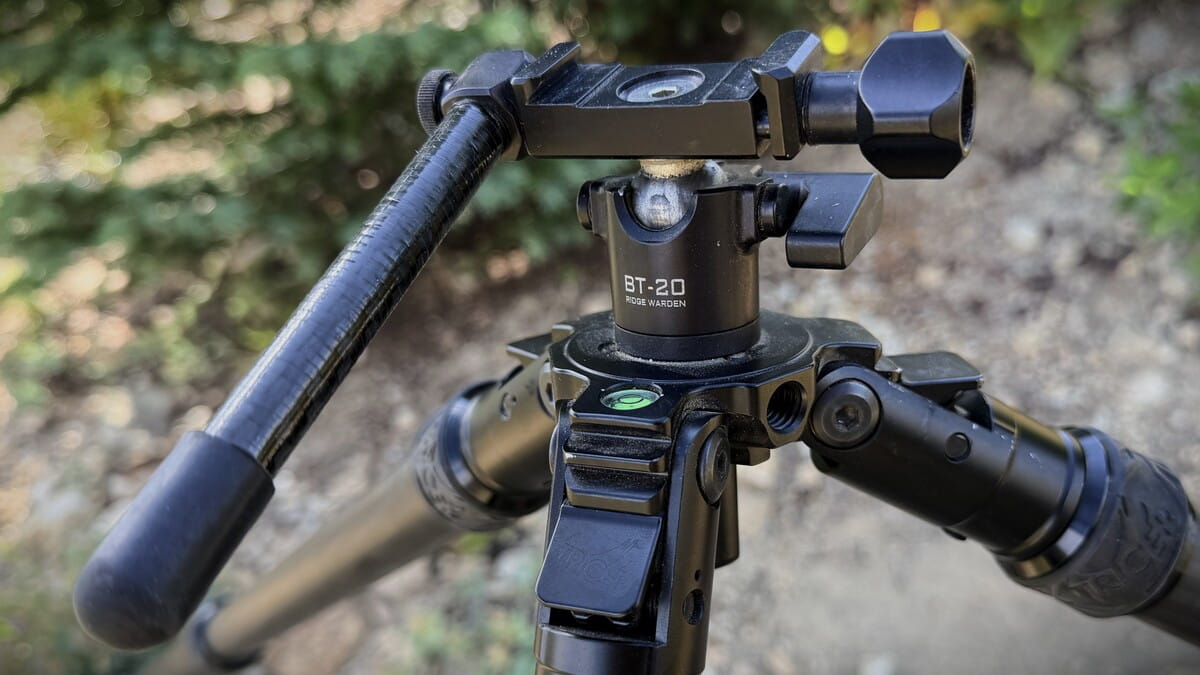
In terms of backcountry hunting, most hunters who prioritize good gear without a significant weight penalty have probably heard of Wiser Precision and some of their offerings. For the past few years, their pan head has been a great option for those trying to maximize capability while minimizing weight.
About a year ago, Wiser Precision launched a pretty unique product in the form of the Ridge Warden head. The design fell right in line with their company goals. When I was given the opportunity to test this head along with the Wiser Precision Sparrow bino adapter, I was very excited to see how they performed.
To explain what stood out to me about this head and binocular mount, let’s first look at my previous glassing kit strategies and what means the most to me when selecting products like these.
My Previous Glassing Setup
For years, I’ve been a fan of a ball head and ARCA clamp. I prioritized leveling, ease of use, and, simply put, I liked the setup and didn’t mind the weight.
Many hunters prioritize one of two things when choosing a glassing setup: functionality or weight. But when it comes to functionality, there are really two different uses to consider—glassing and shooting.
With most modern rifles being some combination of carbon and steel, many are now equipped with an ARCA and/or Picatinny rail. This is probably one of the simplest yet coolest things on modern rifles. The ARCA rail can transform an average hunter who is solid at distance from the prone position and give them a lot more confidence from seated and even standing positions with the rifle clipped into the tripod head.
Make sure to check out our other gear reviews and the Backwoods Pursuit YouTube Channel to help you decide what gear will help you stay out in the field longer!
For the last couple of years, I have knowingly given up some serious glassing efficiency to have a head that I felt confident shooting from. I think a lot of hunters are in the same boat.
Is it possible to glass from a ball head? Absolutely.
Is it as nice as a traditional pan head? Not even close.

Is it faster to set up and get on your rifle when you spot an animal? 100%.
So, could you take the best parts of each setup and make them work together? Wiser Precision aimed to do just that with the Ridge Warden head.
Wiser Precision Ridge Warden & Sparrow Specs
We all love specs the the Wiser Precision Ridge Warden shines in the specs department. So much so that you may find yourself questioning if there’s a typo here. There’s not.
| Ridge Warden Specs | Sparrow Specs | |
|---|---|---|
| Weight | 3.3oz (w/handle) – 3.8oz (w/o handle) | .65oz |
| Arca Swiss | Yes | Yes |
| Made in USA | Yes | Yes |
| Materials | Anodized aluminum and stainless construction | Anodized Aluminum Body | Dyneema/Nylon Laminated Composite Split Cynch Strap |
Wiser Precision Ridge Warden Design
This head gives hunters a real chance at a top-notch glassing experience from a pan head while also providing the ball head features that make shooting from a tripod in uneven terrain possible. It also gives you the ability to quickly level the head and get behind your glass.
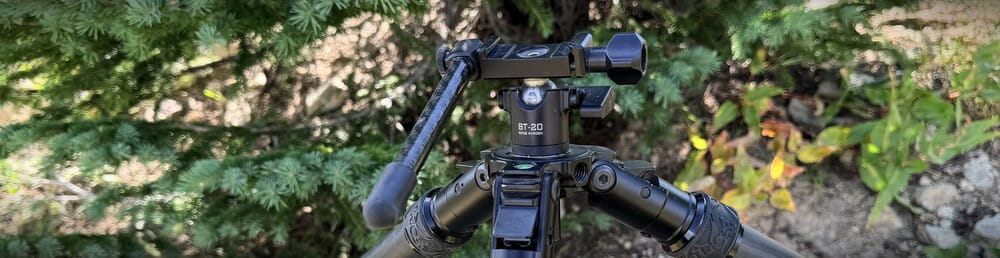
Let’s face it, not every hillside and mountain is perfectly level, and deploying three tripod legs while trying to get the head level can be tricky. With the Wiser Precision Ridge Warden, you are able to level the head like a ball head and then still have most of the features of a pan head.
That feature alone makes it an incredibly useful piece of gear. However, as with almost all things ultralight in the world of hunting gear, there are some compromises and the head does have some negatives that we’ll get into later, but overall, my experience was very positive.
Glassing Performance -Wiser Precision Ridge Warden
When I first started using the Wiser Precision Ridge Warden, admittedly, it had been a while since I had used a pan head because I was so far into the ball head camp. Within a few minutes, though, I was panning my binos around like I was a cameraman on the set of Jurassic Park.
I was scanning each ridge and panning large sections of hillside with hardly 10 minutes of experience using the head. The intuitive design and function made it extremely easy to use without any time to get familiar with it.
HOW IT WORKS: The ball head tilt has small notches in the bottom of the ball to help hold the head at a consistent angle while panning. I really appreciated this small detail because it prevented me from getting to the end of a pan with my neck at some wild angle while still trying to look through the glass.
The small carbon handle works great, and with a little adjustment, I was able to get it to clear the tripod legs far enough that it never felt like a hindrance.
The tension screw that applies pressure to the ball was also very easy to set for binos. I could get it stiff enough that the head wouldn’t run away from me, while still keeping it loose enough to move easily.
Using a Spotting Scope – Wiser Precision Ridge Warden
I as able to test the Wiser Precision Ridge Warden with a spotting scope as well, and overall it performed well. I did, however come across one issue with the placement of the tension screw. Because of the way the lever was indexed, it made it difficult to lock the head down enough to stabilize a large spotting scope.
If the lever was set up for my binoculars around the 9 o’clock position, the spotter position was more around 3 or 4 o’clock, and I had to tilt the head down to access the tension screw. Once I tightened it enough for the spotter, getting the head back into position required enough force that it felt like I was putting a lot of stress on the head. This was less than ideal as it required extra movement while getting the spotting scope set up for use.
This wasn’t a giant issue, but it took some getting used to and really only became a problem when swapping from binos to a spotter. I usually don’t swap back and forth a lot when glassing, so it wasn’t a deal-breaker for me, but if you are someone who does a lot of that, know what you are signing up for.
An easy fix would be an indexable-style tension knob that could be re-positioned on the screw. Obviously, that would add weight, and I understand why Wiser didn’t include it, but I think I could have lived with the extra 0.01 ounces for that very useful feature.
Wiser Precision Ridge Warden Weight
Speaking of weight, I have to take a minute to appreciate how light this head is. I know the specs are state above, but this thing is LIGHT. At only 3.3 ounces (without the handle) and 3.8oz with the carbon handle, the Ridge Warden packs a ton of features, usability, and efficiency into a very small package. It actually shaved weight off my previous glassing setup.
When paired with a lightweight set of tripod legs, you can easily build a complete tripod and head setup under two pounds. In my case, the weight savings allowed me to move up to a more stable and versatile set of tripod legs while still coming in lighter than my previous setup.
I like the ability to stand and glass occasionally, and while that is obviously personal preference and not necessary, it’s a function I prefer to have if possible. That taller tripod also serves as rear support when shooting if needed.
The larger tripod legs also gave me a much-needed upgrade in stability while glassing in high winds and from compromised positions where my previous legs struggled. After using this head for several months, I’ve learned to love it for a number of reasons.
Field Testing – Wiser Precision Ridge Warden
I packed the Wiser Precision Ridge Warden paired with a Tricer HK tripod throughout bear season and scouting so far this year. I spent HOURS glassing with it and also shot from this setup at the range several times. My experience has been incredible.
Because the Ridge Warden is so light, I was able to switch from my previous tripod setup and still save weight while upgrading from the Tricer AD tripod to the Tricer HK shooting tripod. This setup weighed only 2.8 pounds, even with a few wraps of tape. I’ll take that weight every time regardless of the hunt.
The head I had used for several seasons prior was a Sirui Low-Pro ball head. It was light enough at around 0.8 pounds, but combined with the Tricer AD tripod legs, the entire setup weighed about 2.9 pounds.
The 0.1-pound difference doesn’t mean much to me by itself, but I now have a much more capable setup at essentially the same weight.
I think a lot of times, as hunters, we either chase comfort or weight savings. Rarely does a product provide both.
This Wiser Precision Ridge Warden head does exactly that.
Shooting From the Ridge Warden
Shooting from this head is a part of the reason I was interested in this design, and proved to be very doable.
Much like the issue I described with the large spotting scope, I certainly noticed some limitations when shooting. This is not an RRS Anvil head, and it does not lock up nearly as solidly if your goal is to completely lock the rifle onto a target.
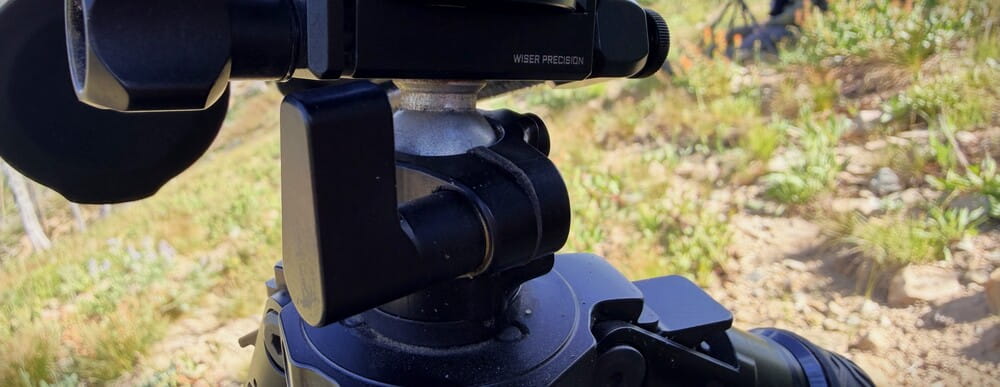
It does, however, provide enough tension to hold on target steadily enough to execute a good shot inside roughly 400 yards in my experience. Recoil through the head is also more noticeable than with a true ball head, but again, at only 3.3 ounces, I’m OK with that.
In most real-world hunting situations, I found this Wiser Precision Ridge Warden to work great.
With the rifle clipped into the Ridge Warden and paired with a solid rear rest—like a buddy’s tripod or a pack – a practiced shooter could confidently engage targets at moderate distances.
When testing the head at the range, I brought two tripods and saw minimal movement when shooting with the Ridge Warden up front and a solid tripod supporting the rear while using Creedmoor-class cartridges.
I usually hunt with a buddy, so having a second tripod available is generally my preferred option. Because of that, this is how I tested the Ridge Warden most often.
I did shoot it a few times with only the rifle clipped into the head, and there was a little more wobble than I would have liked, but I was still able to get impacts at closer ranges.
This head does just fine if you need to get over some brush for a 250-yard shot. I probably wouldn’t take it to a PRS match and expect it to handle recoil all weekend without some issues, but that’s also not what it was designed for.
Wiser Precision Sparrow Bino Adapter
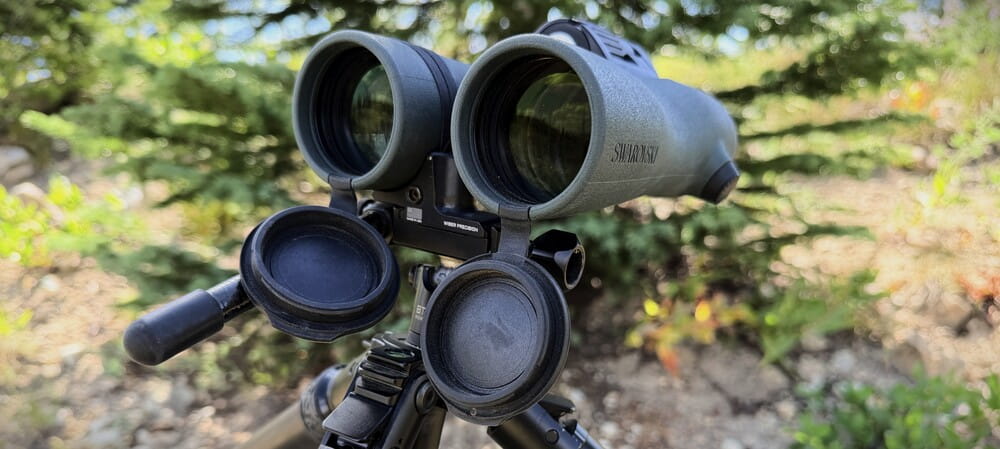
In addition to testing the Wiser Precision Ridge Warden, I was also testing the Wiser Precision Sparrow binocular adapter also did a great job in this setup.
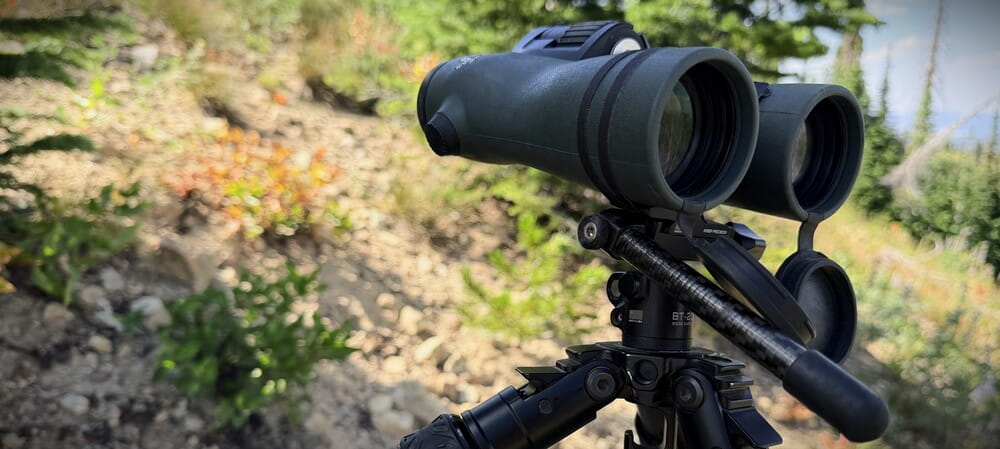
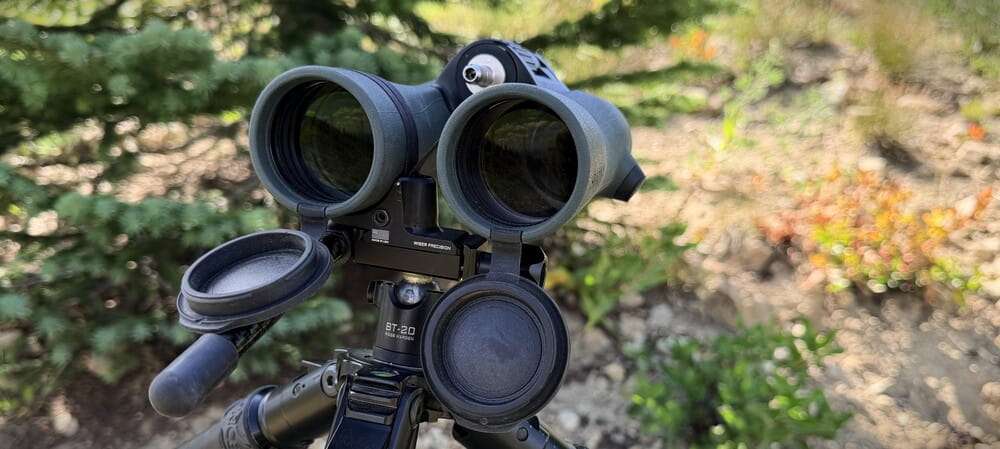
I had it mounted to a set of Swarovski NL Pure 12s, and it was very stable. I also had an Outdoorsmans stud that I would occasionally swap back and forth with while glassing so I could compare the two.
The Sparrow was not quite as stable as the Outdoorsmans system while panning, but when static, it performed very well.
I wasn’t the biggest fan of the tension system and initial setup. It uses a screw that adds tension to the strap as it wraps around the barrel of the binocular. The system works well and eliminates the need for different sizes from one bino to another, but it was a bit of a bother to set up.
Once I had it adjusted, though, it stayed in place and worked great. It simply seemed like more work initially than other binocular clamp systems I have used in the past.
I think it’s a great product for someone who wants one adapter that can be swapped between different binoculars, but it can be a bit of a brain exercise to get set up correctly without watching a couple of YouTube videos.
What I Liked – Wiser Precision Ridge Warden Head Ball – Tilt Head
There is a lot to like about the Wiser Precision Ridge Warden, particularly if you’re looking for a lightweight tripod head that doesn’t force you to choose completely between glassing performance and shooting capability.
Ultra-Lightweight: At just 3.3 – 3.8 ounces, the Ridge Warden is insanely light for the amount of functionality it provides.
Excellent Glassing Performance: The pan head function is smooth, intuitive, and a massive improvement over glassing with a traditional ball head.
Ball Head Leveling: The ability to quickly level the head on uneven terrain without constantly adjusting tripod legs is incredibly useful in the mountains.
Versatile Shooting Capability: While it isn’t as solid as a dedicated shooting head, it provides enough stability for many real-world hunting shots.
Simple, Intuitive Design: It took me very little time to become comfortable using the head.
Sparrow Bino Adapter Versatility: The Sparrow can be adapted to multiple binoculars without requiring different proprietary studs or mounts.
Excellent Performance for the Weight: This system allowed me to increase the capability and stability of my overall tripod setup without adding weight.
What I Didn’t Like – Wiser Precision Ridge Warden
The issues I had with the Wiser Precision Ridge Warden and Sparrow were relatively minor, but there were still a few things I’d like to see improved.
Tension Knob Placement: The position of the ball tension screw can make it awkward to increase tension when switching from binoculars to a heavy spotting scope or rifle.
Spotter Stability: Large spotting scopes require more tension and force to move than I would prefer.
Not a Dedicated Shooting Head: The Ridge Warden works for shooting, but it doesn’t lock up like a heavier, dedicated ball head such as an RRS Anvil.
Sparrow Setup: The tension system on the Sparrow works well once adjusted, but the initial setup is more complicated than some other bino mounting systems I’ve used.
Slight Movement Under Recoil: Recoil is more noticeable through the head than with a dedicated shooting head, particularly when the rifle is unsupported at the rear.
Conclusion – Wiser Precision Ridge Warden & Sparrow
All in all, this Ridge Warden head is remarkable. Is it perfect? No. But the small issues I had with it were so minimal that I eventually had to tell myself to stop overanalyzing it and trying to find problems.
The Ridge Warden worked incredibly well from 20 to 90 degrees, in dry conditions, wet conditions, dust, and just about everything in between. The weight is flat-out silly for everything this head does. It gave me the opportunity to shave a little weight from one area of my kit while beefing up another, and that means a lot to me.
The pan head functionality works almost flawlessly, and the ball head provides just the right amount of tilt to level your glass in some pretty wild terrain. Paired with the Sparrow adapter and a great set of binoculars, this system flat-out works and is rock steady.
I’ll be running this head for years to come, and it has earned a permanent spot in my backcountry gear list.
Subscribe to Backwoods Pursuit to get Your FREE Backcountry Gear Worksheet!!!
Dial in your gear list, calculate your pack weight, and lighten up your pack with this handy tool!

Member Profile