


In this Athlon RangeCraft vs Garmin Xero C1 Pro review we put these two side by side for some real world testing, and bring you our honest, unfiltered results. Both the Athlon RangeCraft and the Garmin Xero C1 Pro Chronographs are compact Doppler radar chronographs designed for serious shooters, hunters, and archers who demand accurate, portable ballistic data. While both deliver impressive performance, they differ in user experience, data handling, and detection range.
Make sure to check out our other gear reviews and the Backwoods Pursuit YouTube Channel to help you decide what gear will help you stay out in the field longer!
How We Tested: Athlon RangeCraft vs Garmin Xero C1 Pro
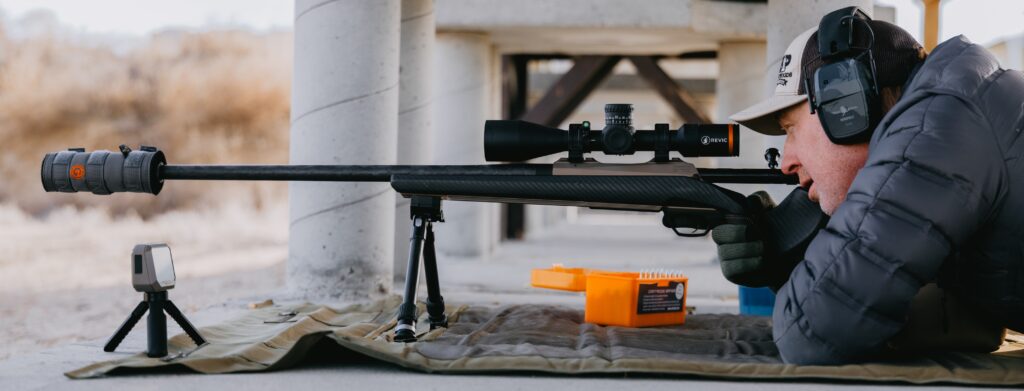
To provide a real-world, in-depth comparison, we compiled test data over the course of many months, varying temperatures (below freezing to over 80 degrees) from:
- ~100 rounds fired from rifles in multiple calibers (6.5 Creedmoor, .308 Win, 6.5 PRC, 7MM Rem Mag, 7 PRC)
- ~100 rounds fired from handguns (9mm, .40 Cal, and .45 ACP)
- ~100 shots taken with a compound bow (IBO ~340 fps)
Each chronograph was deployed side by side in identical conditions. Tests included varied lighting (full sun to evening shade) and platforms (bench rest, prone, and off-angle). All results were recorded, exported, and analyzed for velocity accuracy, shot registration consistency, detection range, and ease of use.
1. Setup & User Experience
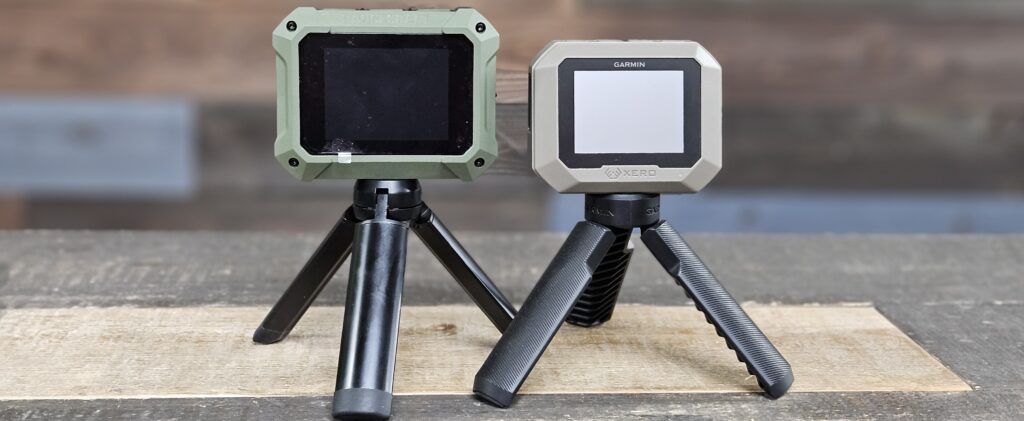
Garmin Xero C1 Pro
- Exceptionally quick and intuitive to deploy. A small tripod/stand included – just set it down, power it on, select your mode, and go.
- Features a crisp, backlit onboard display with full control via the device or Garmin’s mobile app.
- Bluetooth sync is seamless and session management through the Garmin ecosystem is polished and reliable.
- With all buttons located on the top of the unit, one-handed use is easy. Reaching up and depressing any button to end or start a new session is fast and easy since the user is pressing down on the unit rather than using buttons being on the side.
- Does not come with a carry case. Given the price of this unit, it should come with a custom-built case like the Athlon.
Athlon RangeCraft
- The unit comes in a nice carry case, but the tripod must be removed for it to fit in the case. Setup requires the user to screw on the included tripod, which slightly increases setup time, but the tripod is included.
- The Athlon app is effective, but feels less refined than Garmin’s. If you already use the Athlon app, you’ll likely find the ballistic solver integration useful. However, if you have another favorite ballistic app, it’s nice to them separate like the Garmin app offers.
- Has a significantly larger display than the Garmin Xero C1, which is easier to read – a clear advantage during outdoor range work or when multiple shooters are referencing the data on the fly.
- The arrow/navigation buttons are located on the side of the Athlon RangeCraft and proved to be more cumbersome than those on the Garmin, requiring two hands to operate rather than being able to reach up to the unit with one hand during a shooting session as with the Garmin Xero.
- The included case is small and compact, making it easy to toss in your range bag.
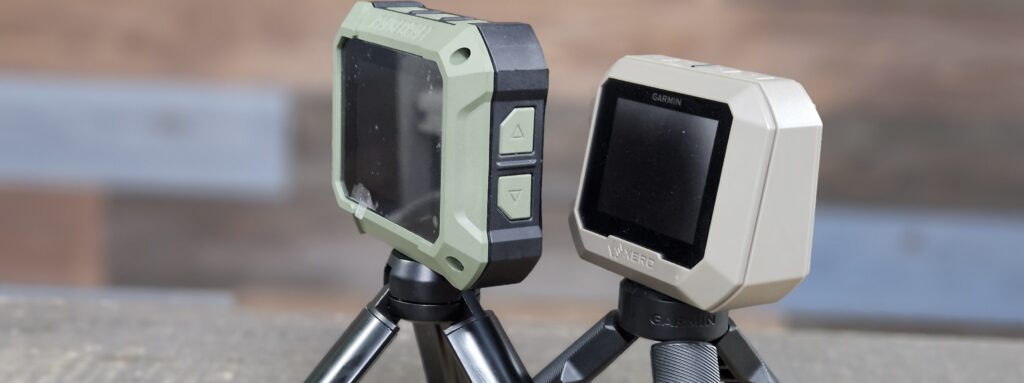
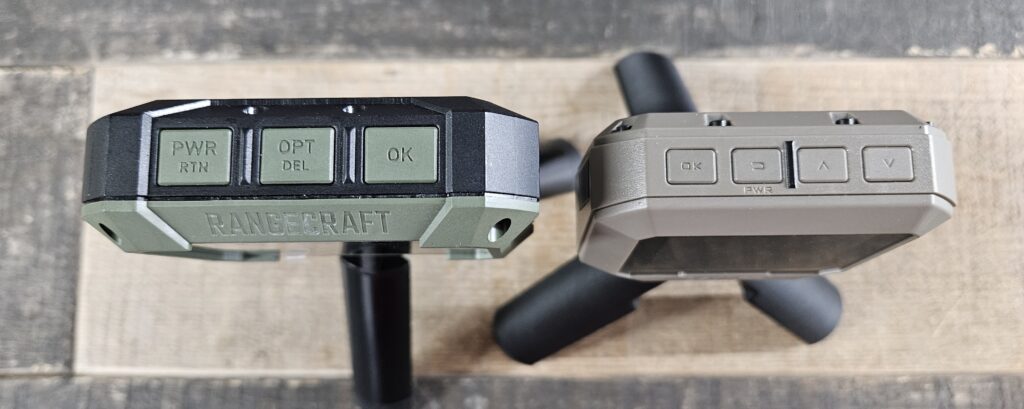
WINNER: Garmin, for total user experience and interface fluidity. However, Athlon’s larger, slightly more readable screen stands out for visibility in field conditions.
2. Accuracy & Reliability – Garmin Xero C1 vs Athlon Rangecraft Chronograph
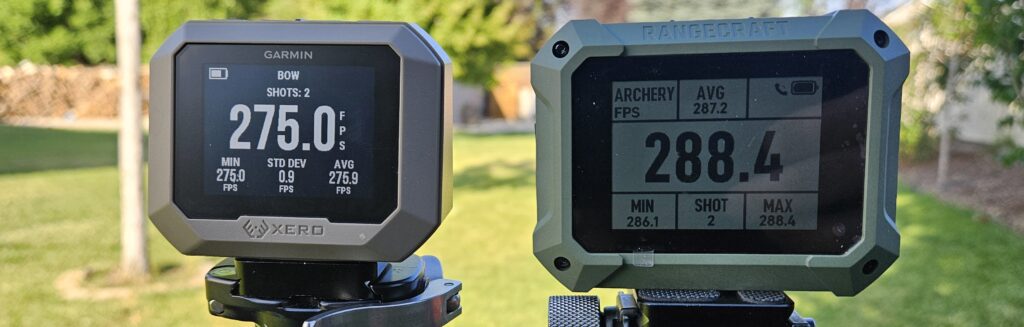
While both units essentially function in the same way and achieve the same results, there are a few notable differences between them that you’ll want to be aware of.
Garmin Xero C1 Pro
- Performed consistently across all tested platforms—rifle, pistol, and bow.
- No issues with missed shots when using rifles or a bow, or in variable lighting conditions (with one caveat noted below).
- Displays velocity with a short delay of 1–2 seconds after the shot—acceptable for most applications though slightly laggy during rapid-fire shooting sessions. Notably slower response time than the Athlon RangeCraft.
- Produced consistently tighter standard deviations (SD) and lower extreme spreads (ES) across all loads tested (with the units side by side gathering data from the same shot sessions). This data appears to indicate superior internal consistency and makes it a better option for users who demand extremely precise data.
Athlon RangeCraft
- Returned velocity readings nearly twice as fast as the Garmin Xero—typically under 1 second. This is a tangible benefit during pistol shooting, AR or any rapid fire sessions where quick pacing and real-time feedback are valuable.
- However, it consistently reported velocities 10–12 fps higher than the Garmin across multiple loads, platforms, and use case scenarios. While this offset was predictable, there’s no definitive way to verify which unit is more accurate without laboratory-grade calibration equipment.
- At times, the Athlon RangeCraft returned erratic or clearly inaccurate readings (both with rifles and archery equipment), forcing users to discard those data points. Though not common, these anomalies introduce some doubt about its precision.
- ES and SD were measurably higher in nearly every test group compared to the Garmin, indicating greater shot-to-shot variance.
- During use with archery equipment, the noted 10-12 fps difference is much more statistically significant when building your arrows with a target speed in mind, or selecting a sight tape for your bow.
- During testing with archery equipment, the Athlon RangeCraft seemed more susceptible to producing shot data that was undeniably inaccurate and sporadic compared to the much more consistent Garmin Xero C1.
Real-World Impact
- For most practical purposes—handgun shooting, casual rifle work, or hunting—the 10–12 fps difference and slightly higher ES/SD won’t significantly affect the point of impact at realistic hunting distances.
- However, in the context of precision rifle load development, where shooters may be striving for single-digit SD and sub-MOA performance at 600 yards and beyond, the inflated SD and ES from the Athlon RangeCraft may paint an exaggerated picture of the load’s consistency.
- That said, it’s impossible to know which chronograph is closer to the true value without comparing both against a certified lab instrument which certainly wasn’t in our budget.
WINNER: Garmin– for trustworthy, stable, and repeatable readings that inspire greater confidence in both general use and precision load development. The Athlon is faster and highly usable, but its inconsistency and inflated numbers relegate it to less critical roles—falling short for extreme long-range precision shooting and demanding archery applications.
3. Detection Range Testing – Garmin Xero C1 vs Athlon Rangecraft Chronograph
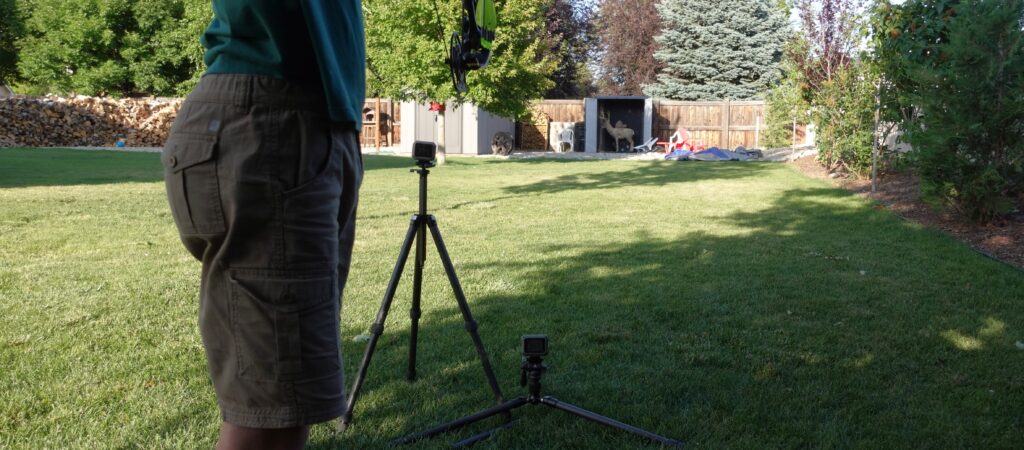
One of the most surprising differences emerged in detection range testing— specifically how far from the projectile path each unit could reliably register a shot.
Garmin Xero C1 Pro
- Consistent registration out to approximately 2.5 feet from the projectile path- beyond that, detection became unreliable and sporadic.
- The Garmin Xero C1 Chronograph offers a much more restricted detection range than the Athlon Rangecraft Chronograph, with the Athlon reliably detecting shots at more than double the distance from the muzzle (approximately 2.5 feet vs over 4 feet).
Athlon RangeCraft
- The detection range of the Athlon RangeCraft was nearly double that of the Garmin Xero C1, easily detecting and registering shots out to 4 feet from the muzzle/arrow, whereas the Garmin’s detection range became unreliable at around 2.5 feet.
- More forgiving of off-angle shots, uneven terrain, or unconventional setups.
Real-World Implication
The Athlon RangeCraft’s extended detection range offers a substantial advantage for field shooters who can’t guarantee alignment— which is particularly valuable when shooting from natural and/or uneven terrain.
- The much more robust detection range offered by the Athlon RangeCraft is a notable and significant benefit of the Athlon, providing more forgiveness in its placement.
WINNER: Athlon– with a clear edge in detection and setup flexibility.

4. Software & Ballistic Integration – Garmin Xero vs Athlon Rangecraft
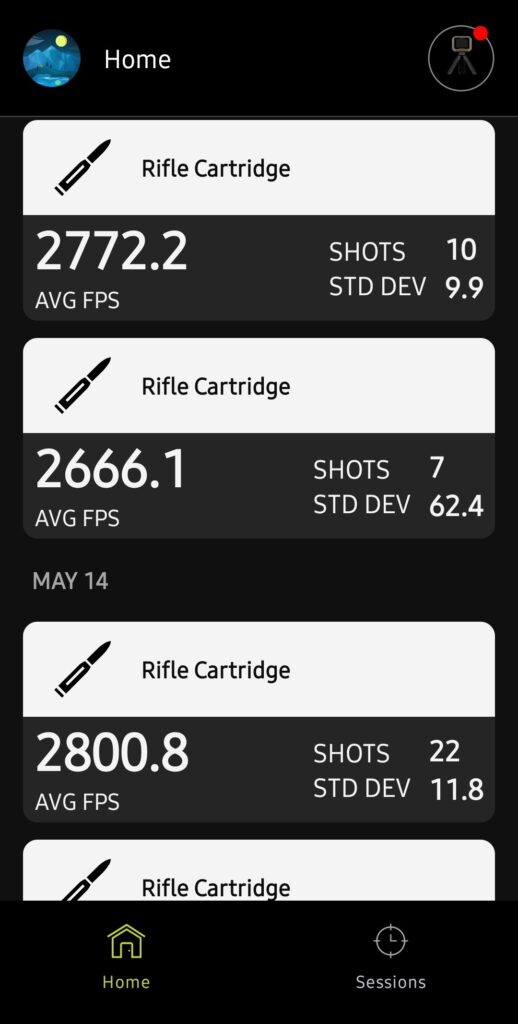
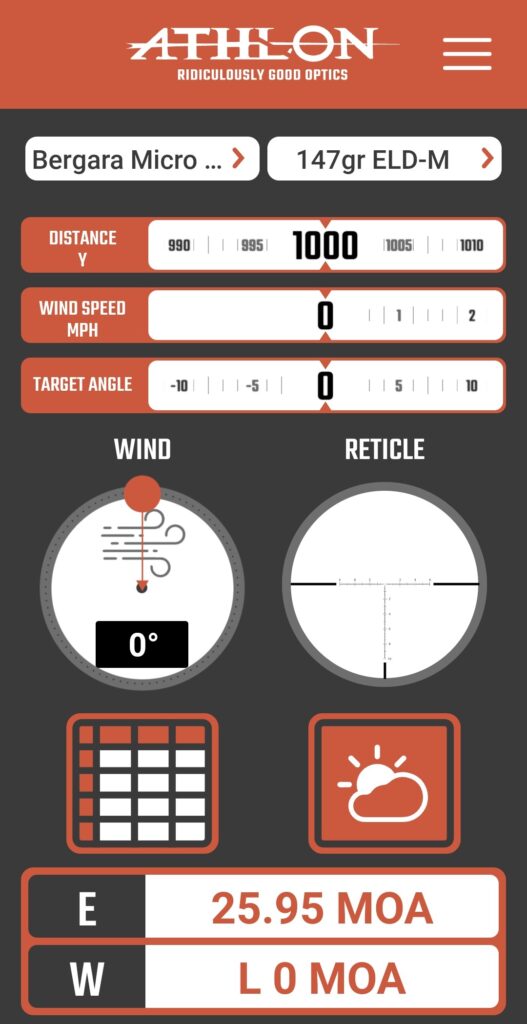
Another one of the distinct differences we noted in this Athlon RangeCraft vs Garmin Xero review was in the app. While this may not be significant for some, and there is certainly a matter of personal preference when it comes to app functionality, we noted notable differences in this category.
Garmin Xero C1 Pro
- Full integration with Garmin’s Ballistics app
- No integrated ballistic solver
- Clean, organized shot logs and profile management.
- Regular firmware updates and CSV exports make this system plug-and-play for long-range shooters.
Athlon RangeCraft
- App supports data logging and .csv exports, however, at the time of our testing, data exporting was not supported for Android users.
- Integrated ballistic solver
- Functional, but lacks the deeper polish of Garmin’s ecosystem
WINNER: Garmin– While we’ve talked to some folks who prefer the Athlon app, our team walked away liking the simplicity and functionality of the Garmin app for its easier and more reliable pairing with your phone, more streamlined data exports, and overall simpler, more user-friendly operation. We didn’t want or need a ballistic solver integrated with the RangeCraft app. However, if having a ballistic solver integrated into your chronograph app appeals to you, the Athlon app is the way to go as this functionality isn’t something that Garmin offers.
5. Build Quality & Portability – Garmin Xero vs Athlon Rangecraft
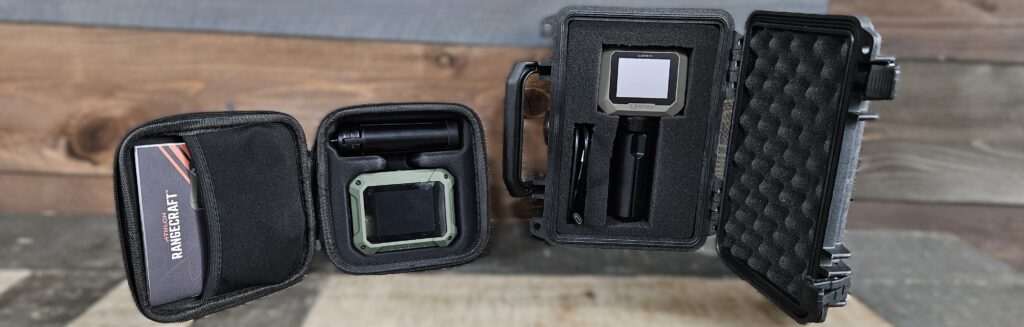
While there isn’t much to say in this category, there are a few notable differences when it comes to build quality and portability.
Garmin Xero C1 Pro
- Small, rugged, weather-sealed (IPX7) housing (IPX7 only rated for waterproof, whereas the IP67 includes a dust-proof rating). We wish the Garmin Xero C1 offered the same IP67 rating that the Athon Rangecraft does for it’s complete dust protection.
- Easily fits in a pocket or ammo pouch
- Does not come with a carry case. I purchased a Pelican 1120Protector Case and it has worked great, but is slightly bulky when compared to the case that the Athlon comes with.
Athlon RangeCraft
- Superior IP67 waterproof and dustproof rating
- Slightly bulkier due to larger size
- Durable construction, but seems slightly less refined than the Garmin Xero
- Smaller overall packed size due to the design of the included carry case
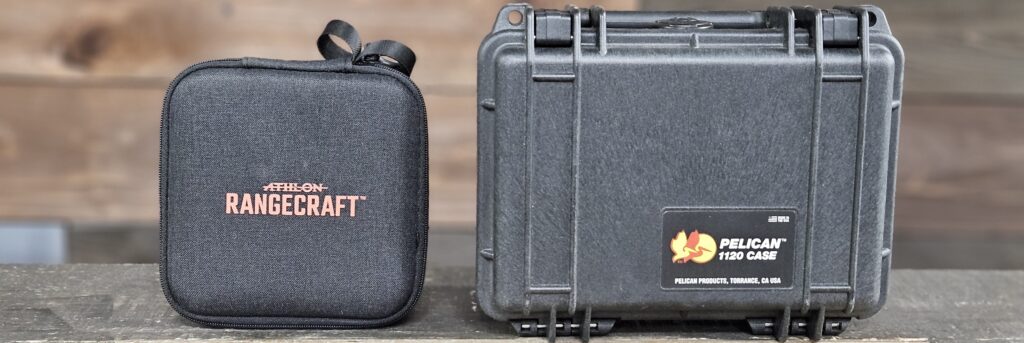
WINNER: Too Close to Call. Overall, we preferred the build of the Garmin Xero C1 slightly, and with the Pelican 1120 case customized for the Garmin Xero C1, it can be thrown in just about any situation without issue. However, the IP67 dustproof and waterproof rating of the Athlon RangeCraft gave us more peace of mind at the range once the unit is deployed since it’s usually dusty at every rifle range I’ve ever been to.
6. Price & Value – Garmin Xero vs Athlon Rangecraft
- Garmin Xero C1 Pro: approximately $599
- Athlon RangeCraft: approximately $399
Garmin commands a premium for its ecosystem and usability while Athlon significantly undercuts it while still delivering high-end ballistic performance. While you give up a bit in overall consistency and usability, the cost savings are so significant that it’s hard to justify the price tag of the Garmin Xero.
WINNER: Athlon– for those prioritizing budget and seeking the hands-down better overall value.
Final Verdict – Garmin Xero vs Athlon Rangecraft
| Category | Winner |
|---|---|
| Setup & Usability | Garmin |
| Accuracy & Reliability | Garmin |
| Detection Range | Athlon |
| Software Ecosystem | Garmin |
| Portability & Durability | Too close to call |
| Price & Value | Athlon |
One important consideration regarding the above rankings: If you want to have your ballistic solution and chronograph data in one app, the Athlon app is the way to go. However, if your favorite ballistic app isn’t the Athlon app, viewing and exporting data from the chronograph is more cumbersome than with the Garmin app. So, your rankings may be different than ours with this in mind.
Conclusion Athlon Rangecraft vs Garmin Xero C1 Review
So, after conducting our testing for this Athlon RangeCraft review next to the Garmin Xero C1 Chronograph, which one would we pick? The answer really comes down to budget and primary use cases. If budget is not a primary consideration and you need the most accurate and reliable option for chasing those single-digit SDs, and need something that’ll work the same for long-range rifle shooting as it does at the archery range, we’d grab the Garmin Xero C1.
However, unless ultimate precision is your game, the Athlon chronograph not only gets the job done but does so in a package that is more affordable, easier to see thanks to its larger display, comes with a great carry case, and offers the same practical operation as the Garmin at a fraction of the cost. Sure, you’ll have to throw out some shot data here and there and understand that it’s not ideal for archery, but its super responsiveness and speedy delivery make this the better option for any rapid-fire application.
Best of all, the Athlon RangeCraft Chronograph is far more affordable, and the reality is most of us aren’t good enough shooters to actually notice any point-of-impact difference from a 10-feet-per-second change on a rifle shot. If you can, well, you are a far better shot than I am, and likely well beyond a realistic hunting shot distance.
Subscribe to Backwoods Pursuit to get Your FREE Backcountry Gear Worksheet!!!
Dial in your gear list, calculate your pack weight, and lighten up your pack with this handy tool!

Thanks for the review.
Just curios on the data acquisition that you chose the Garmin to be accurate and the Rangecraft was deviating. What led to the determination that the Garmin is the accurate device.?
Typically. a control mechanism with a known outcome is used to determine deviation or variance. With only two devices, it would seem the data is subjective as to which one is accurate.
Hey Jeff! That’s a great question. Yes, as noted in the review, we certainly don’t have the highly technical equipment to determine with one is “more accurate”. That being said, we focused more on which one produced more consistent results during our testing. An example of that is the periodic readings we received from the Athlon that appeared to be anomalies. Or, in other words, there were a lot more erratic seeming readings from the Athlon, when the Garmin remained consistent with the average data that had been gathered on any particular gun or bow. The Garmin seemed to never have these readings that were out of character and/or clearly incorrect. Either that assumption is true or all of a sudden my bow randomly shot arrows 20fps faster than is average…which is statistically very significant with a bow. The differences with a rifle were statistically NOT significant and would hardly be noticeable concerning point of impact. It happened enough when the Garmin remained consistent when they were side by side, that our conclusion was that those anomalies were most likely error in the Rangecraft rather than the gun or bow (particularly given that the reading from the Garmin on those same shots was consistent with typical performance). I hope that helps! It’s not perfectly scientific by any stretch, but more of a conclusion based on the body of work and analysis.
Arrow FPS has been discussed a couple of times by other reviews. Each of the reviewers contacted Athlon whom indicated they were making changes in the software updates since it came out a little over a year ago. Athlon has had 4 software updates from what I can find online. What version was on the unit you tested. Also did you contact Athlon and discuss the issue you had? If so, what was their take on the discrepancy? Garmin makes amazing products and their system has been out several more years than the Athlon which would have provide them time through software updates to address similar issues. If none of these steps were taken by you during or after your testing and review I ask why.
Hello, and thanks for reading. When I did my testing I had the most recent software version downloaded that was available at the time. Yes, I did contact Athlon about the discrepancy between them, and they indicated that they felt that theirs was the most accurate. Like you, I’ve heard others say that they may push out firmware updates to address the archery discrepancy, but I have not heard if that has been done as of now. Thanks for reading.
Testing two Doppler radar units side by side can cause interference as they are both sending and receiving very similar signals. There may be some frequency variances, but feedback interference can cause inaccurate readings.
If you want to check velocity consistency, you can only do this using a non-Doppler/radar unit set up at the same time you use a radar based unit. Otherwise you risk inconsistencies due to frequency feedback. Yes, the FCC requires that there can be no interference from the unit on other electronics, but the Garmine and Athlon both are sending the same signals.
Thanks for the feedback and info! Good to know.
Thanks for the review and comparison just what I was looking for between the Garmin and Athlon chronographs. However, while reading through the review, I sensed a subjective bias to the Garmin over the Athlon. The first example was during the first category of the set up and overall experience. Should they both not have received the same fair rating for having to attach a tripod? It seemed Athlon received a lower remark because you had to screw in the tripod, is this not the same for both? The Garmin was noted to be exceptionally quick whereas the Athlon was bulky due to the tripod.
“Exceptionally quick and intuitive to deploy. A small tripod/stand included – just set it down, power it on, select your mode, and go.”
“Setup requires the user to screw on the included tripod, which slightly increases bulk and setup time, but the tripod is included.“
Additionally, I felt the rating of the fifth category, “Build quality and portability” was unfairly reviewed after considering the Athelon came with a case included, larger screen for readability, and a better rating for waterproofing and dust proofing. The remarks indicate that it was pretty much a “wash” however, the chart indicates Garmin was the winner.
Hey! Thanks for your thoughts and impute. I can appreciate where you are coming from, and I could have done a better job explaining within the article. The reason for the better rating for the Garmin in the first category is that in order to use the included case with the Athlon, the tripod must be unscrewed. With that Pelican case that I bought for the Garmin, I could leave the tripod on it and just set it out. To be fair, you are right…I could just get another Pelican case for the Athlon and make that equal, and it would effectively a was. That said, I did dock the Garmin for not coming with a case at all, which is should.
In the 5th section, I do feel like the benefits of each of the them offsets the benefits of the other model, so I do feel like that section is too close to call, but thank you for pointing out the discrepancy in the chart…I’ve corrected that.
Thanks for taking the time to drop a note!