
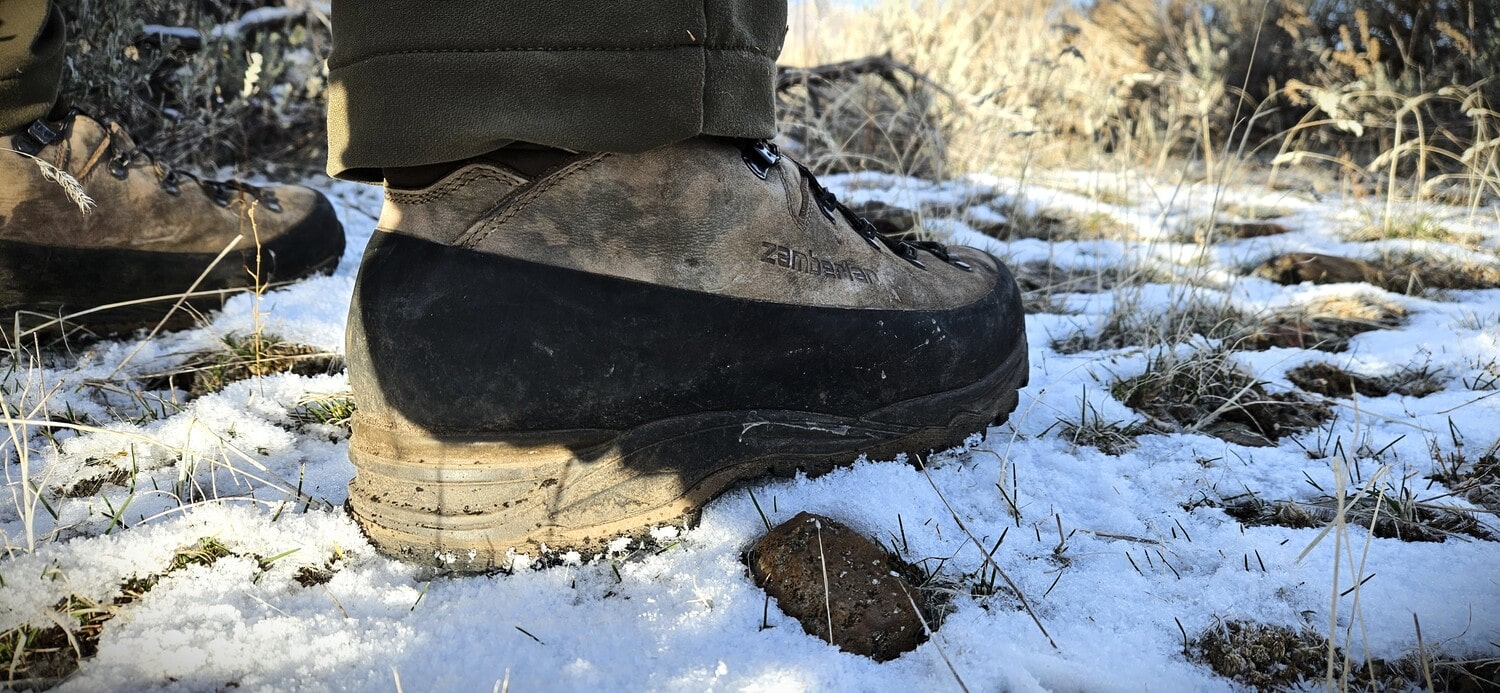
Sometimes you just need a warm boot. Cold weather, late season hunts, and deep snow often require a good insulated boot. The Zamberlan Sawtooth insulated boots offer just that. What makes them different from the next insulated boots? While there is only so much a company can do to differentiate themselves from the competition when it comes to boots, Zamberlan has long stood out in our testing for excellent quality, a great fit, and top-tier durability.
One of the compromises you have to accept when considering insulated, late-season boots is weight. For a number of reasons, this style of boot is not where you want to look if you’re chasing an ultralight option. Deep snow and cold temperatures typically lend themselves to a stout, leather boot. While I love ultralight boots for early season, I have no problem grabbing a larger, heavier, full-leather boot when Mother Nature starts throwing nasty weather into the mix.
When To Grab Insulated Boots – Zamberlan Sawtooth Boots
TEMPERATURE & ACTIVITY LEVEL: One of my big questions going into this review was how much versatility I could get out of the Zamberlan Sawtooth boots. While that’s entirely a personal question—as everyone’s feet get cold at different points—my frame of reference was that I typically don’t reach for insulated boots until temperatures start dropping below the 20-degree mark.
Of course, the level of activity plays a big role in that decision as well. Sitting and glassing or riding an ATV in 25 degrees is entirely different than hiking 2,000 vertical feet in 25 degrees, so the type of hunt I’m doing plays a big role in whether I choose insulated boots or not.
Looking for something different than the Zamberlan Sawtooth Boots? Check out our other boot reviews!
I always cringe a bit when grabbing a heavier boot because I know that every pound on your foot is said to equal roughly five pounds in your backpack when it comes to physical exertion and long-term endurance. While I don’t know if that’s scientifically proven, I can attest firsthand that I’ve found a lightweight boot simply allows me to climb faster and expend less energy doing it. However, there is definitely a time and place for insulated boots. Just like a boot that doesn’t fit, cold feet can turn a hunt into a miserable experience in a hurry.
Sizing Note – Zamberlan Sawthooth Boots
One interesting thing I found with the Zamberlan Sawtooth boots is that, unlike some of the other Zamberlan boots that have run a bit on the large side, these were true to size. I typically wear an 11.5, and that’s exactly what fit me perfectly in these boots.
The Testing – Zamberlan Sawtooth Boots
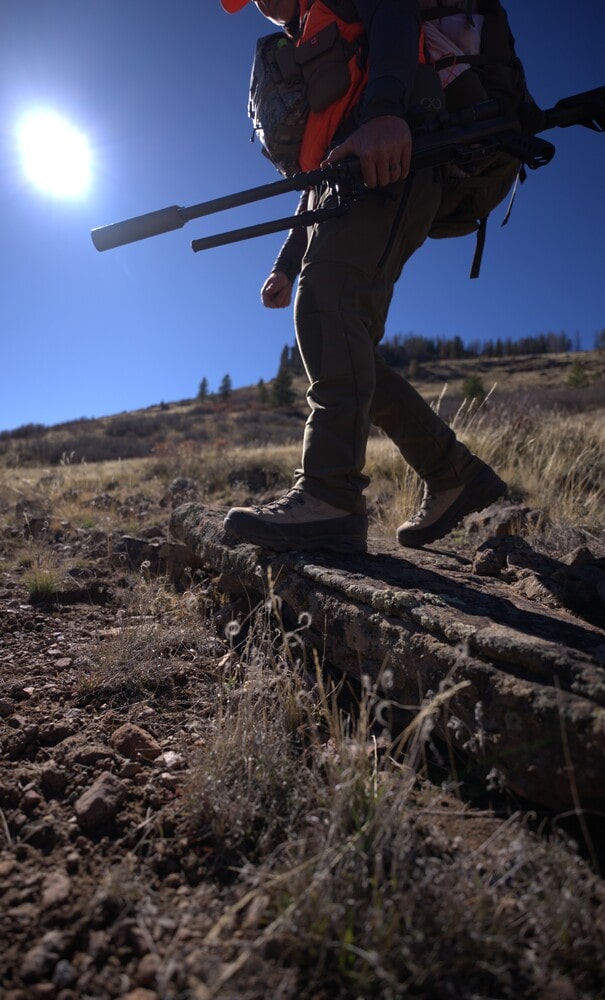
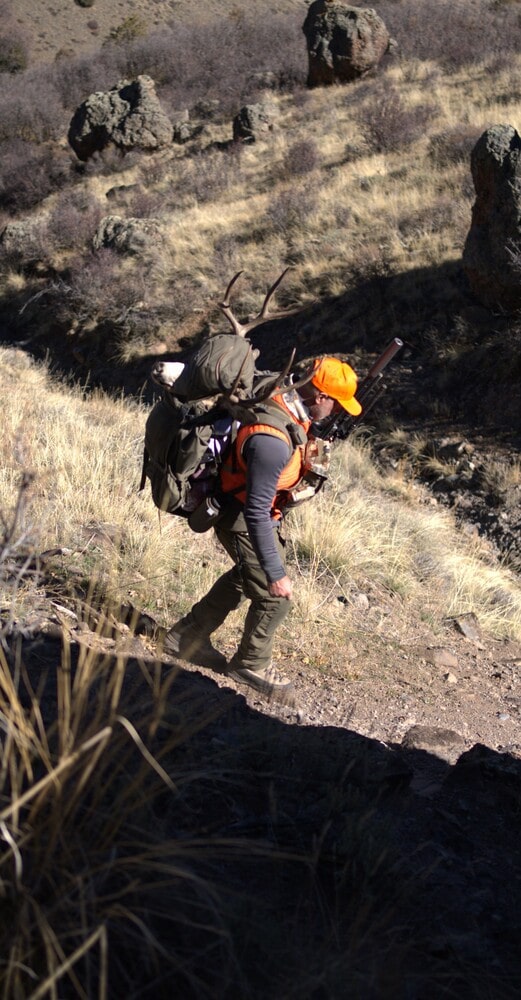
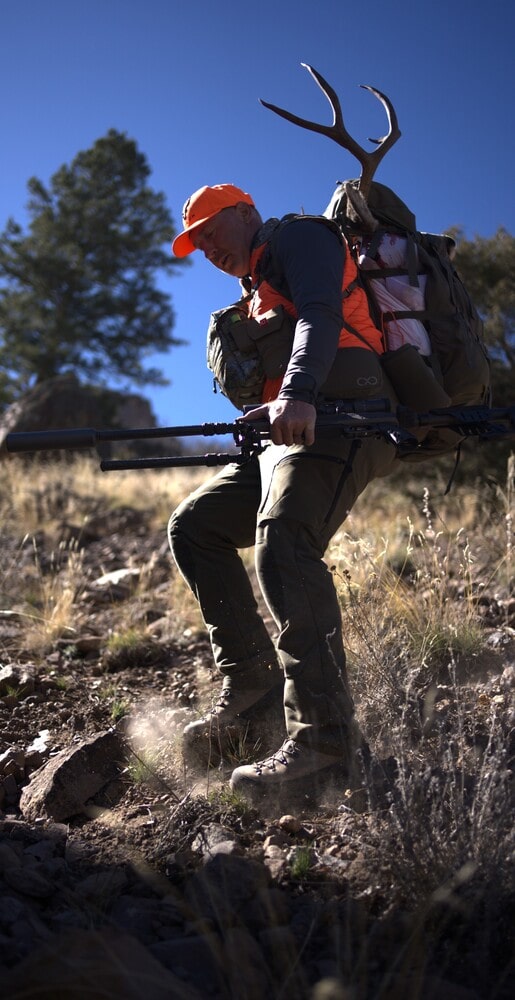
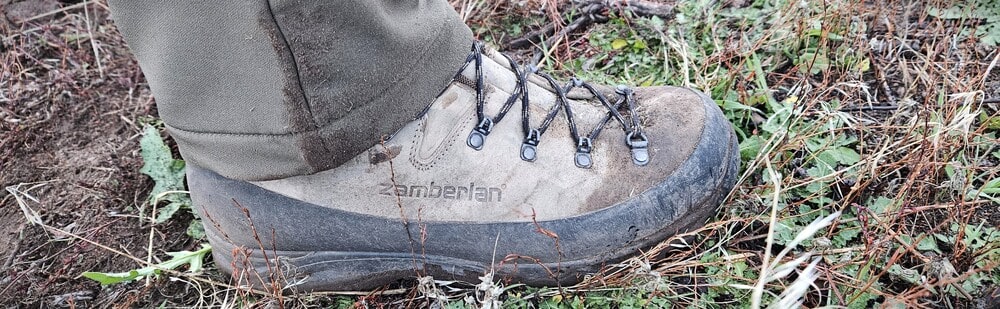

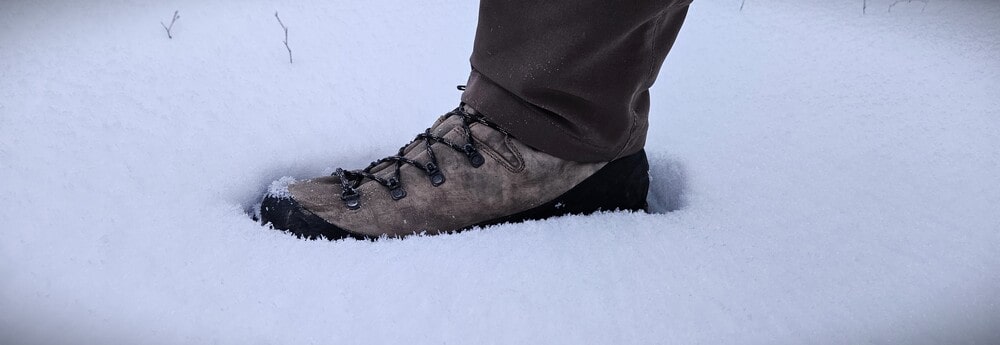
Here at Backwoods Pursuit, we do our best to thoroughly test gear before publishing reviews, and that was certainly the case for this Zamberlan Sawtooth review. Most of the miles I put on these boots were off-trail, in the snow, side-hilling through rugged terrain, in unforgiving mountains, through shale and sharp rocks, and spending days on end in wet, rainy conditions. I took a solid two years of using these boots before writing this review because, quite simply, I don’t use insulated boots as much as I do non-insulated boots.
I tested these boots with heavy loads while packing out elk and deer we harvested, and even used them while riding many miles of mountain trails on my motorcycle, where they were regularly getting scraped, rubbed, and slammed against rocks and brush.
The Specs – Zamberlan Sawtooth Review
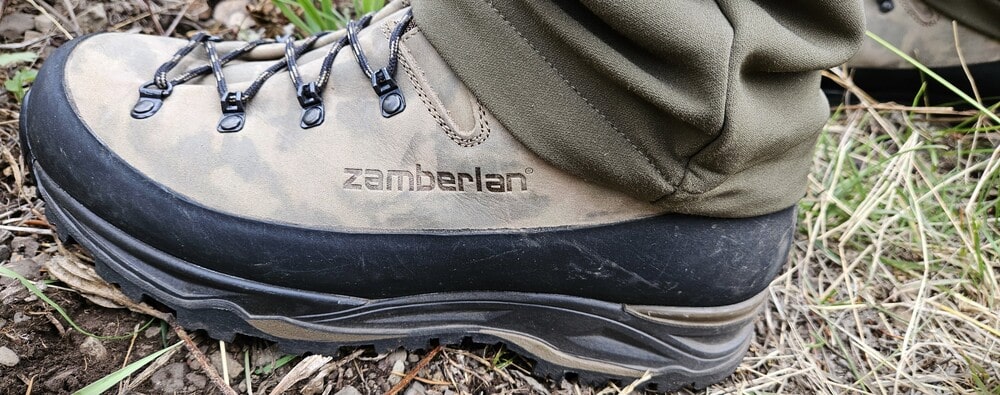
If you are looking at the Zamberlan Sawtooth boots, you are likely interested in their specs and already know that lightweight footwear makes a huge difference. As I mentioned above, I’ve even heard it said that every pound on your boots or shoes is equivalent to having five pounds in your backpack. Now, I’m not sure if that’s actually true, but what I can say is that fatigue sets in more slowly when you’re wearing a lighter-weight boot. That said, there’s a balance to be found depending on the weather and temperatures you’ll be facing.
Here are the specs and details that you get with the Zamberlan Sawtooth boots:
| Zamberlan Sawtooth Boots | |
|---|---|
| Weight (1 boot, US size 9 / EU size 42) | 33.3 oz |
| Height | 11 inch |
| Waterproof | Yes – Gore-Tex Insulated Comfort |
| Insulated | Yes (~200 gram) |
| Upper material | 2.8mm Italian Hydrobloc Nubuck Leather |
| Rubber Rand | Yes – Full |
| Midsole | bi-density PU midsole (one lower-density for cushion and one higher-density for support) |
| Outsole | Vibram StarTrel II |
| Last | ZWL (Zamberlan Wide Last) |
| Resolable | Yes |
Make sure to check out our other gear reviews and the Backwoods Pursuit YouTube Channel to help you decide what gear will help you stay out in the field longer!
What is interesting about these boots is the taller 11-inch height and wider last. Initially, I was not sure about either of those features. I don’t typically order a wide last and, honestly, don’t like boots taller than 8 inches max, so I went into this somewhat skeptical. However, after using them for two years, I found that neither of those features was a deterrent, and despite the taller height, these Zamberlan Sawtooth boots feel amazingly light for what they are.
At just over 33 oz per boot, these boots are actually slightly lighter than the similar Crispi Guide GTX Insulated boots (which I also have used and love). Given that they are three inches taller than the Crispi Guides and have a wide last to accommodate additional insulation and thicker socks, the Sawtooth’s weight is impressive. Even more impressive than the weight is just how good they feel when hiking. You wouldn’t know you’re wearing an 11-inch boot—they feel more like a 6- or 8-inch boot. Again, impressive.
Speaking of the wide last, Zamberlan intentionally used the Zamberlan Wide Last in this boot to give you extra room for warm socks and the insulation built into the boot. It makes sense and proved to be perfect for me. I was able to wear typical lightweight or mid-weight socks if temps weren’t going to be that cold, or step up to thicker warm socks—or even double layers—if needed, and still had room to do so without the boots feeling too snug. Zamberlan did an impressive job designing and tailoring these boots for cold-weather conditions where warm socks are often required.
Craftsmanship/Build Quality – Zamberlan Sawtooth Boot Review
I might be understating the Zamberalan Boots quality a bit, because over the years of testing various models, I’ve come to expect top-notch quality from Zamberlan. The Zamberlan Sawtooth boots are no different and have held up perfectly to everything I’ve thrown at them. Because every pair of Zamberlan boots I’ve personally tested has been top-notch in quality, I’ve come to expect it from them. They are expensive boots, but I’m always impressed with their quality, even at the higher price point.
Out Of The Box Comfort – Zamberlan Sawtooth Boot Review
Given that the Zamberlan Sawtooth boots are an 11-inch full-leather boot, I fully expected a long and painful break-in period. However, to my surprise, they were extremely comfortable starting with the very first hike—so much so that I felt confident heading straight into the mountains with them shortly after. Sure, the more I wore them, the better they fit and the more they broke in, but right out of the gate they were comfortable.
Even when brand new out of the box, the well-designed rocker helped me roll through each step with ease and didn’t make me feel like I was laboring or stiff-legged, which I’ve experienced with other tall, full-leather boots during the break-in period.
Bottom line, these Sawtooth boots required almost no break-in time for me—as crazy as that sounds.
Lightweight vs Heavy Duty Boots
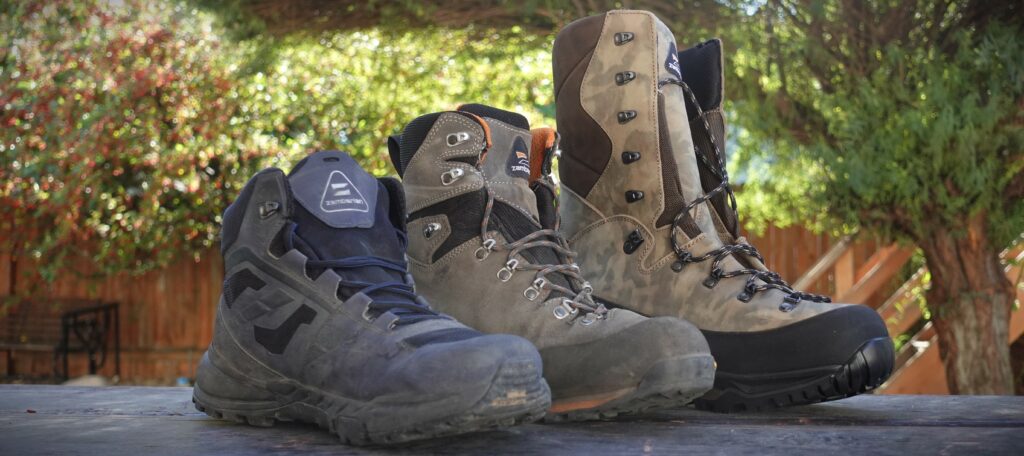
Arguments can certainly be made both ways when it comes to lightweight versus heavier, full-leather boots, but I have personally come to love lightweight boots and use them whenever possible. That being said, there are absolutely times when I reach for those beefy, heavy, all-leather boots.
LIGHTWEIGHT BOOTS – BEST USES
Within the lightweight boot category, I’ve found a wide range of options, most of which suffer from subpar durability and less-than-satisfactory waterproof performance. Unfortunately, that’s just something most lightweight boot fans learn to live with. For this reason, I prefer to use lightweight, mid-hiker–style boots for scouting trips and early-season archery hunts, as I typically don’t encounter as much adverse weather or cold temperatures during those times. Here are some of the pros and cons of lightweight boots:
Lighter weight
More flexible
More agile
Reduced fatigue (due to less weight)
Faster drying
More breathable
Less durable
Less waterproof
One of the downsides of these kinds of boots is that if you need to walk through heavy, dew-covered vegetation—or if an unexpected storm rolls in—you might find yourself a bit wet. In those situations, you may wish you had laced up your tall leather boots, but by then it’s too late to make the switch. That’s just one of the risks associated with a minimalist approach and choosing a lightweight boot.
That being said, if you select a quality pair of lightweight boots like the Zamberlan Baltoro Lite, you will minimize that risk as they performed admirably.
HEAVYWEIGHT/LEATHER BOOTS – BEST USES
When it comes to handling harsh weather, a good pair of heavy-duty leather boots like these Zamberlan Sawtooth boots is often the right decision. Leather does a better job of keeping rain, snow, and cold out than most synthetics, and as a result, you’ll stay dry and comfortable longer—which ultimately keeps you in the field. As mentioned before, you do pay the price in weight and agility, but I am more than willing to put up with that for warm, dry feet on a cold winter day. That is simply a no-brainer. Another benefit of many leather boots is that they often offer an insulated option for when temperatures really drop.
For the sake of experimentation, I tried a pair of lightweight synthetic “waterproof” boots on a cold, wet day of hunting in rain and snow, and there simply was no comparison to a pair of quality, heavy-duty, waterproof leather boots. The leather boots kept my feet dry for days on end, rather than being soaked on the first day with the lightweight synthetic boots—even though both had a GORE-TEX waterproof liner. The treated leather makes a big difference. That said, treated leather can take longer to dry once it does become saturated, so that’s something to take into consideration.
Based on my experience over the last 30 years of wearing all kinds of footwear, here are some of the pros and cons of heavier leather boots:
- Better durability
- More waterproof
- More rigidity
- Better ankle support
- Better with heavier loads
- Warmer
- Heavier
- Less agile
- More “clunky” feeling
- Take longer to dry once saturated
Factory Insole Replacement – Zamberlan Sawtooth Boot Review
When doing a boot review, I always give the factory insoles a fair chance to perform before replacing them. Like most boots out there, the ones that come with the Zamberlan Sawtooth boots are, well, not that good. In reality, they are kind of terrible. After just a couple of hikes with the factory Zamberlan insoles, I could already tell they were compressing and would simply not cut it on long days in the field.
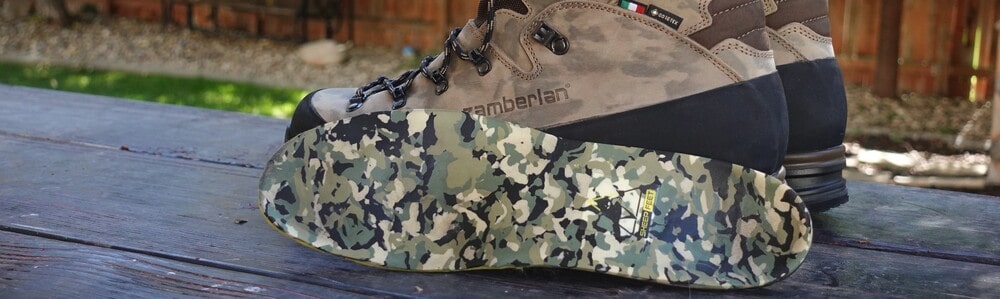
With pretty much every pair of boots I have ever worn, I ended up replacing the insoles. There are a couple of great options I’ve used over the years. If you don’t want to spend a small fortune on custom orthotics, one of my longtime favorites, the SuperFeet Trailblazer Insoles, is an excellent option at a reasonable price.
However, over the last couple of years, I decided to give the Sheep Feet custom orthotics a try—and man, what a difference. Those SuperFeet insoles are great for a budget-friendly option, but there was simply no comparison when stacked up against the Sheep Feet custom orthotics. They do cost more and require a bit of a process to get, but it is absolutely worth it. You end up with a fully customized orthotic, made specifically for you, based on an imprint of your foot.
USE THE CODE “BACKWOODS” FOR 10% OFF YOUR SHEEPFEET PURCHASE
Stiffness & Support – Zamberlan Sawtooth Boot Review
Over the years, I have gone back and forth between more flexible, lightweight boots and stiffer, more rugged boots. I’ve tested the Zamberlan Anabasis hikers and Zamberlan Baltoro Lite boots both of which have a more flexible midsole, and I’ve also used and tested boots with a stiffer midsole, such as the Crispi Thor II boots (see that Crispi Thor II review here).
Some folks love that stiffer feel, while others are opposed to it. I find that there can be a place for both, but I often lean toward a more flexible midsole overall.
Because of that, I loved the flex of the Zamberlan Sawtooth boots. They fall about in the middle of the pack in terms of stiffness—I’d say very similar to the Flex 3 rating of the Crispi Guide boots I reviewed (see that review here). I’ve found that I really like that mid-range level of stiffness in cold-weather insulated boots, but that’s entirely a matter of personal preference.
I also found there to be plenty of footbed cushion in the Zamberlan Sawtooth boots. This can be particularly critical for high-mileage hikes, heavy load hauling, people with nerve issues in their feet, or those who are more prone to developing sore spots underfoot. That extra support and cushioning is also welcome during long hikes through steep, nasty terrain.
Admittedly, I do not have nerve issues in my feet and am not particularly prone to underfoot soreness, so I may not be the best person to fully assess this attribute. That said, I can say that I didn’t experience any issues whatsoever with the Zamberlan Sawtooth boots. They offered what felt like a generous amount of underfoot cushion. For the off-trail, rugged terrain, meat-hauling miles I put them through, the footbed cushioning was spot on—providing plenty of comfort for long days on my feet without creating hotspots.
Lacing Eyelets – Zamberlan Sawtooth Boots
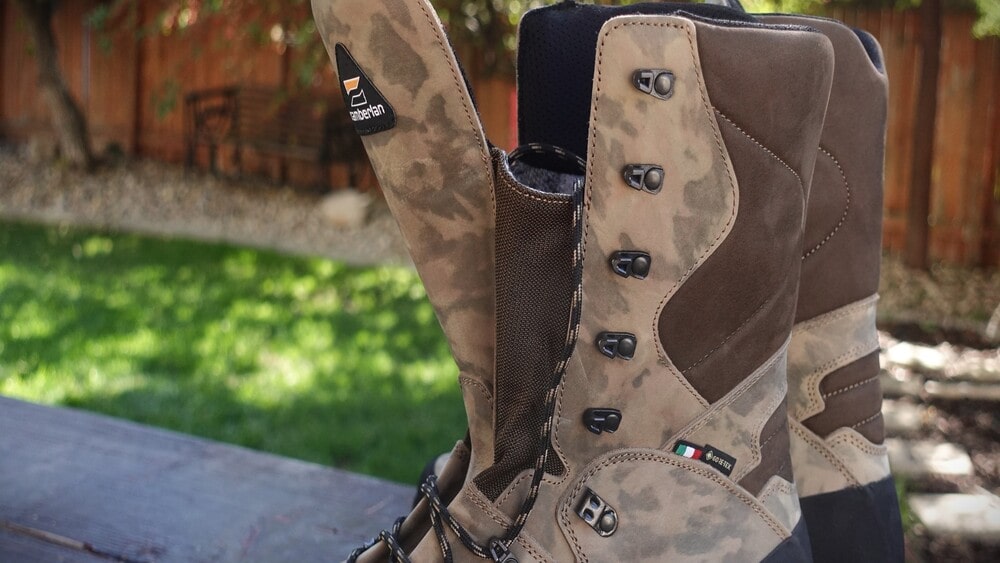
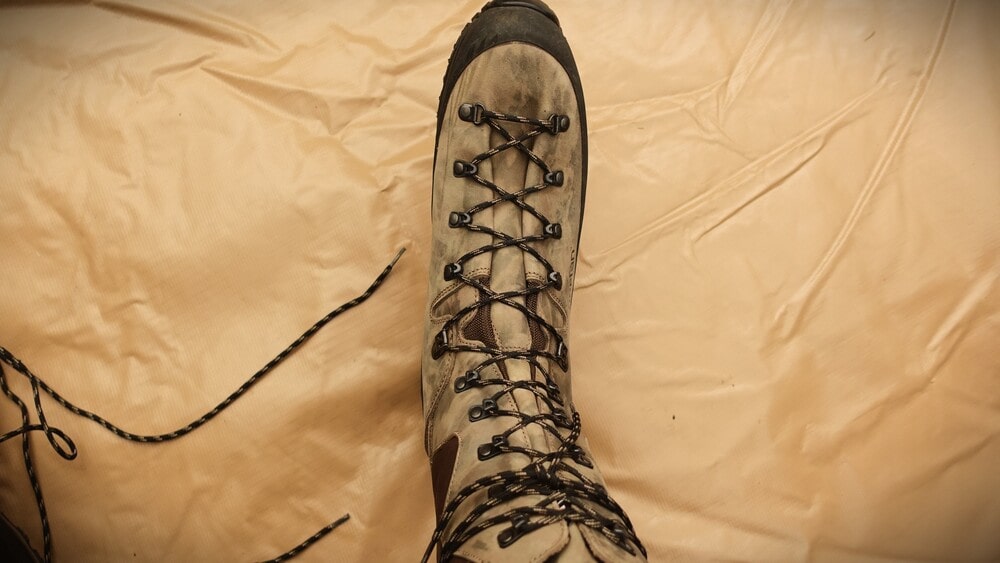
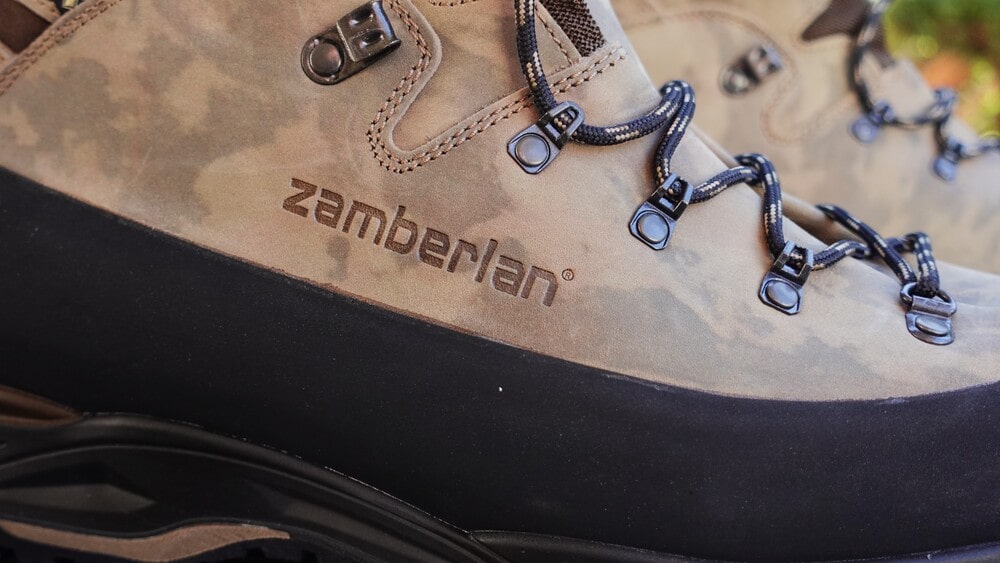
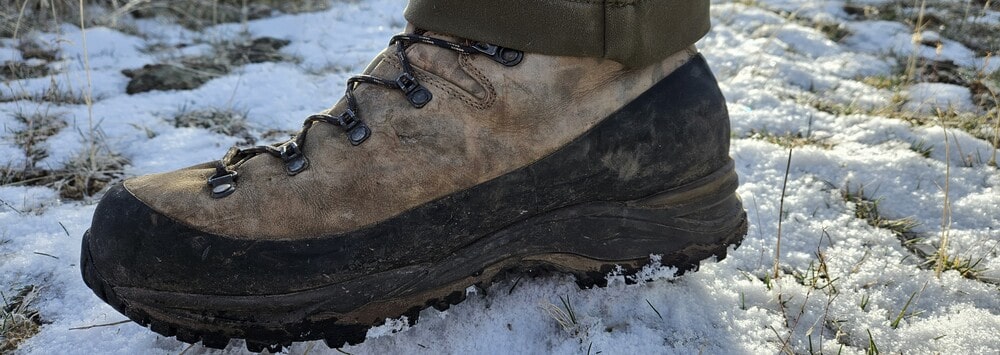
There is nothing particularly special or unique about the lacing system on the Zamberlan Sawtooth boots, but the hardware they use is robust and never once gave me the slightest trouble. The ankle hooks are set nicely deep to ensure your foot does not slide, and they are solidly built, never once bending or curling.
I like that the upper six pieces of hardware are hooks rather than loops or closed rings, which allows me to open up the boot more easily for quick on and off. It’s also faster and easier to lace and unlace as needed. I’ve found this configuration to be my preferred lacing system style over the years.
Traction / Outsole – Zamberlan Sawtooth Review
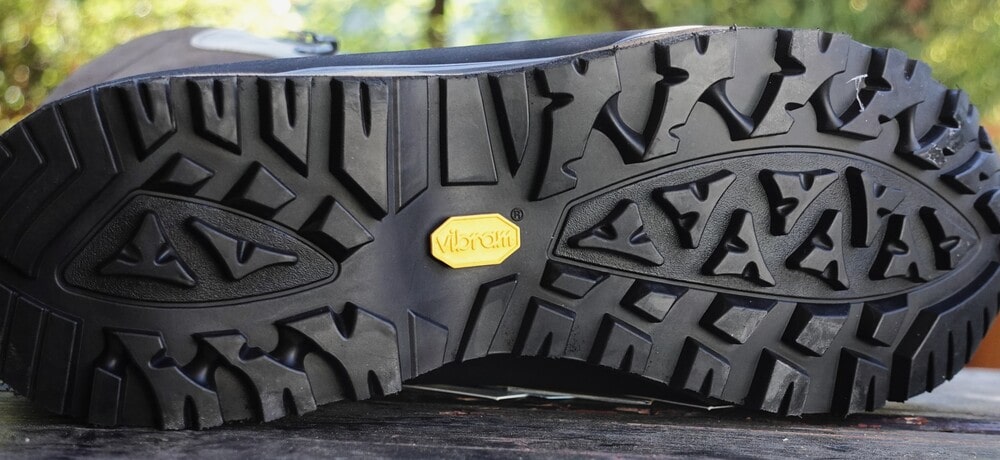
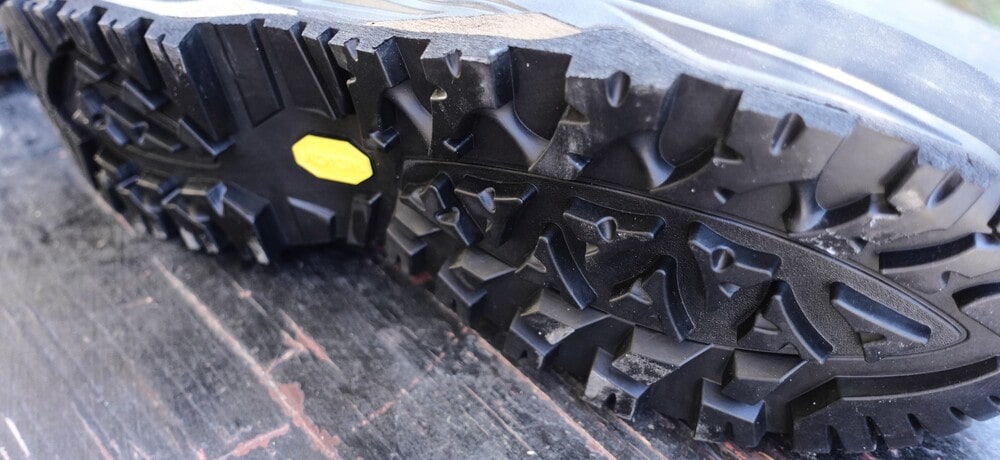
When I am looking for a cold-weather, late-season mountain boot that’s able to handle the rigors of steep, nasty terrain, a deep tread pattern with plenty of space between the lugs is a must-have. This is particularly critical in snow, as it allows for adequate traction and helps shed snow more effectively. I’ve used boots with a shallow tread pattern in the snow, and I end up spending more time on my backside than I’d prefer. The Zamberlan Vibram StarTrek II outsole does exactly this and performs exceptionally well in snowy conditions.
From steep mountains with soft dirt underfoot to shale slides, wet rocks, and packed snow, I never once felt like I was sacrificing traction in any condition with the Zamberlan Sawtooth boots. I had these boots in everything from snow to rain, cold to relatively warm temperatures, and on both soft and firm ground. I absolutely love these outsoles in a late-season boot.
Materials – Zamberlan sawtooth Boots
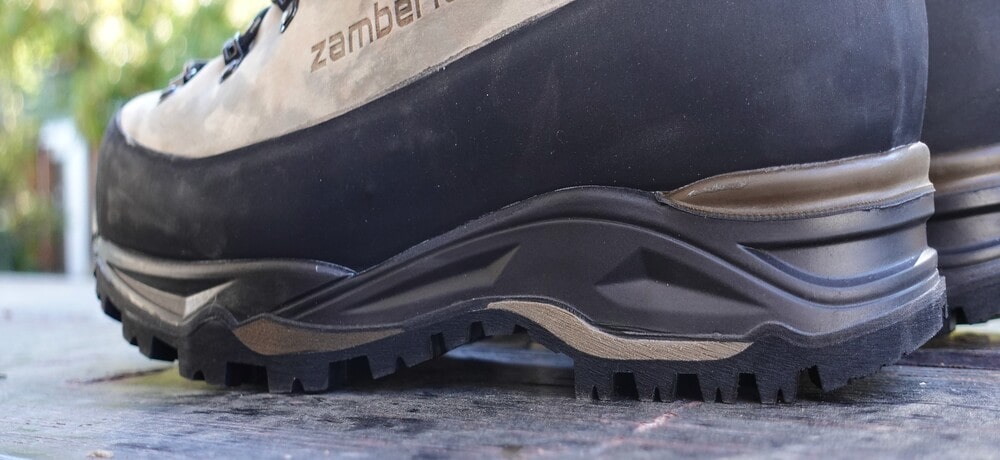
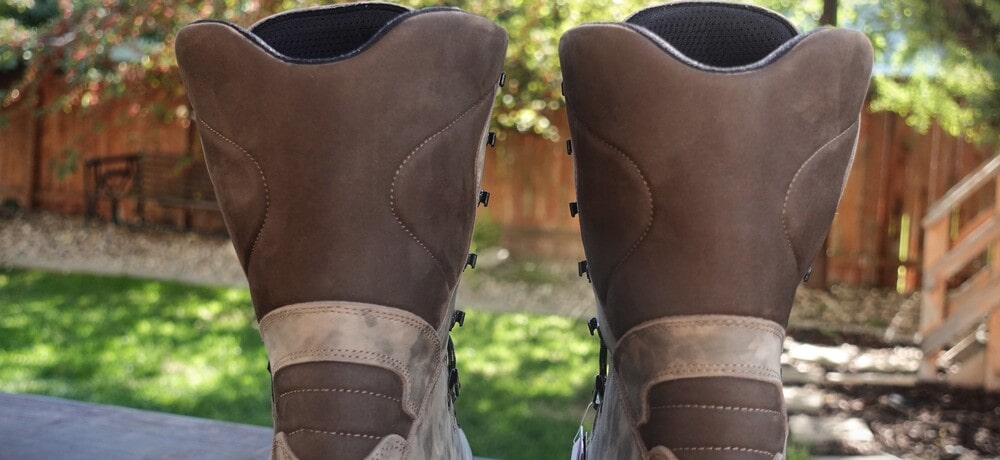
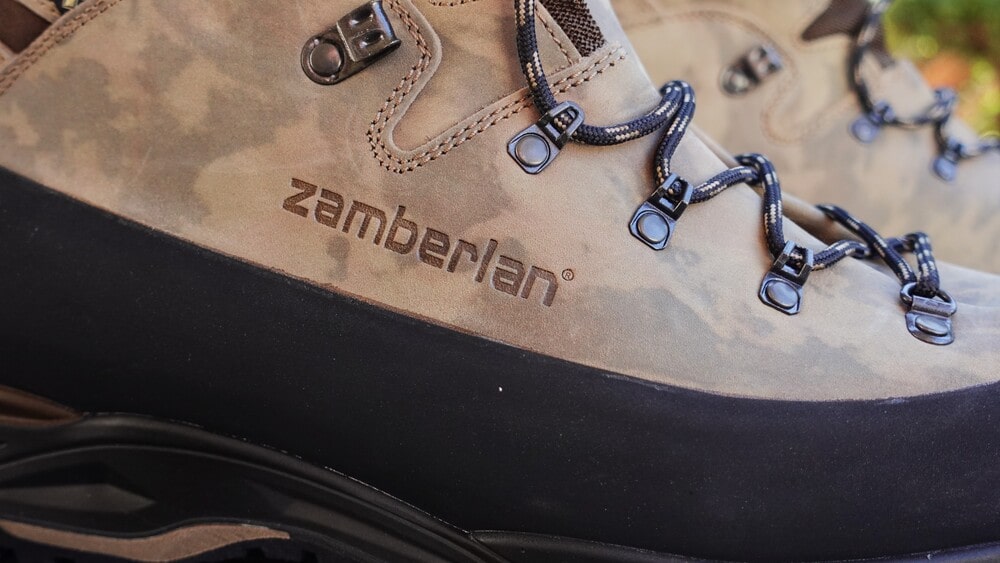
The Zamberlan Sawtooth boots are made with high-quality Italian Hydrobloc® Nubuck leather uppers. At 2.8 mm in thickness, they are extremely durable and can handle a serious beating. The full rubber rand proved to do an excellent job protecting this critical part of the boot and, after two years of use, has not even started to de-laminate from the boot.
Waterproof Testing – Zamberlan Sawtooth Boot Review
Waterproof testing in a late-season boot can be tough, as for me at least, wearing the Zamberlan Sawtooth boots meant the temperatures were likely below freezing and, if there was any precipitation, it was usually snow. That being said, I did have these boots in the snow, some light rain, and crossed plenty of creeks in them.
However, I wouldn’t say I fully tested how waterproof they are, as I simply didn’t encounter the kind of rainstorms needed to truly put that to the test—you know, the kind of rain that lasts for days on end. Those kinds of storms are not as common here in Idaho as they are in some other places out West.
That being said, I have full confidence in these boots until proven otherwise. My experience with other Zamberlan boots has given me a lot of confidence in the brand, so until or unless I’m proven otherwise, I wouldn’t hesitate to take these boots if heavy rain were in the forecast. If anything changes, I’ll update this review.
After 2 Full Seasons Of Use – Zamberlan Sawtooth Boot Review
While two full seasons sounds like a lot for a boot review, given that these are insulated boots—and not ones I wear primarily—I wanted to take the time to use them enough to deliver a thorough and honest review.
I was never concerned about durability, as that’s often a concern with lightweight boots, but I still made a point of putting these Zamberlan Sawtooth boots through their paces in multiple terrains, multiple states, and in rain, snow, and mud. I rode a four-wheeler with them on a late-season elk hunt, hiked snow-covered mountains, rode a dirt bike on single-track mountain trails, and even hiked in temperatures higher than I typically use insulated boots in to get a good feel for their overall comfort range.
Through all of this, these Zamberlan Sawtooth boots performed extremely well and came out looking no worse for wear. The rubber rand remained fully intact and in perfect condition, the leather itself held up well—as expected—and no seams or high-wear areas broke down or showed any signs of excessive wear. The outsole has seen minimal wear, and the lugs have hardly worn down at all. I expect these boots to last many, many more good years.
Annual Care – Zamberlan Sawtooth Boot Review
Annual care for these Zamberlan Sawtooth boots is quite easy, ais quite easy and very similar to most other leather boots you may have used. Zamberlan recommends using their Hydrobloc®Leather Conditioning Cream as it is specifically formulated for their Hydrobloc® Leather that is featured on these Zamberlan Sawtooth boots (as well as some of their other boots). Simply remove dirt and debris using water and a brush or a wet rag, let them dry, and then apply the Hydrobloc® cream. It’s pretty simple and easy, and you’ll have great-looking boots ready to take on adverse weather once again.
What I liked – Zamberlan Sawtooth Boots
The Zamberlan Sawtooth boots were flat-out awesome. Comfortable out of the box with very little break-in, durable, warm, and far more versatile than I expected, they handled everything I threw at them and are boots I’ll grab whenever the temps drop and the snow starts flying. Here’s the short list of my favorite things about these boots:
- Lightweight for a tall, late-season boot (just over 2 lb each)
- Very durable
- Ultra-comfortable
- Flexible and extremely supportive
- Excellent late season outsole with great traction (Vibram StarTrek II outsole)
- Fast break-in
- Great rocker to aid in rolling through your steps more efficiently
- Wide last for extra sock layering
What I Disliked – Zamberlan Sawtooth Boots
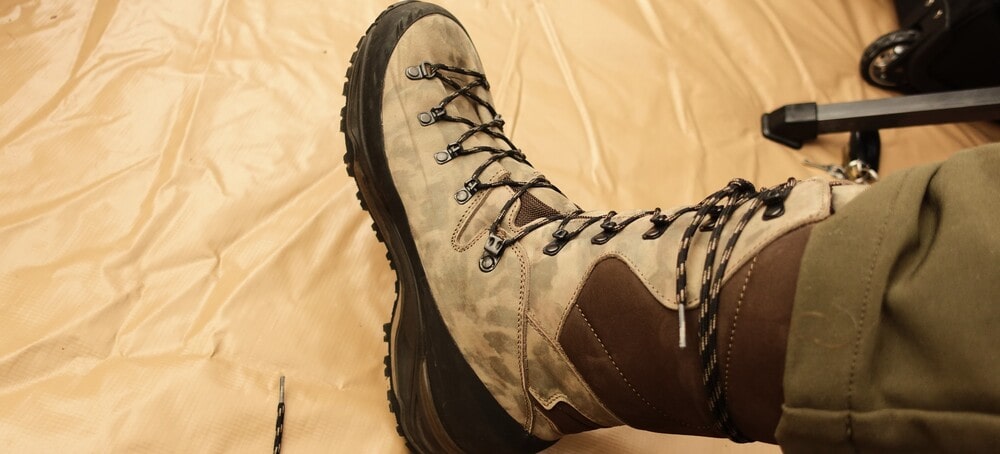
Even though I absolutely love these boots, there was one thing that stood out to me that I’d change—and really only one thing: their 11-inch height. The 11-inch height felt a bit excessive, and I’d absolutely love to see these offered in an 8-inch version. Not only would that likely improve comfort (even though they’re already extremely comfortable), it would also save some weight and put these boots leaps and bounds above the competition rather than being just barely lighter than comparable options.
- Height: I wish these were offered in an 8-inch boot.
Maybe I’m being a bit too picky, but I’ve personally found that an 8-inch boot is all I ever need. If I’m going to be in deep snow, I’ll grab gaiters regardless of whether I’m wearing an 8-inch or 11-inch boot, so that extra three inches really isn’t needed for me.
Conclusion – Zamberlan Sawtooth Boot Review
After two years with these Zamberlan Sawtooth boots, they’ve jumped to the top of my list for late-season hunting boots. While I’ll certainly keep an eye on Zamberlan’s website to see if they ever release an 8-inch version, the 11-inch height ultimately didn’t bother me as much as I thought it would. Give them a try, and I don’t think you’ll be disappointed.
Subscribe to Backwoods Pursuit to get Your FREE Backcountry Gear Worksheet!!!
Dial in your gear list, calculate your pack weight, and lighten up your pack with this handy tool!