

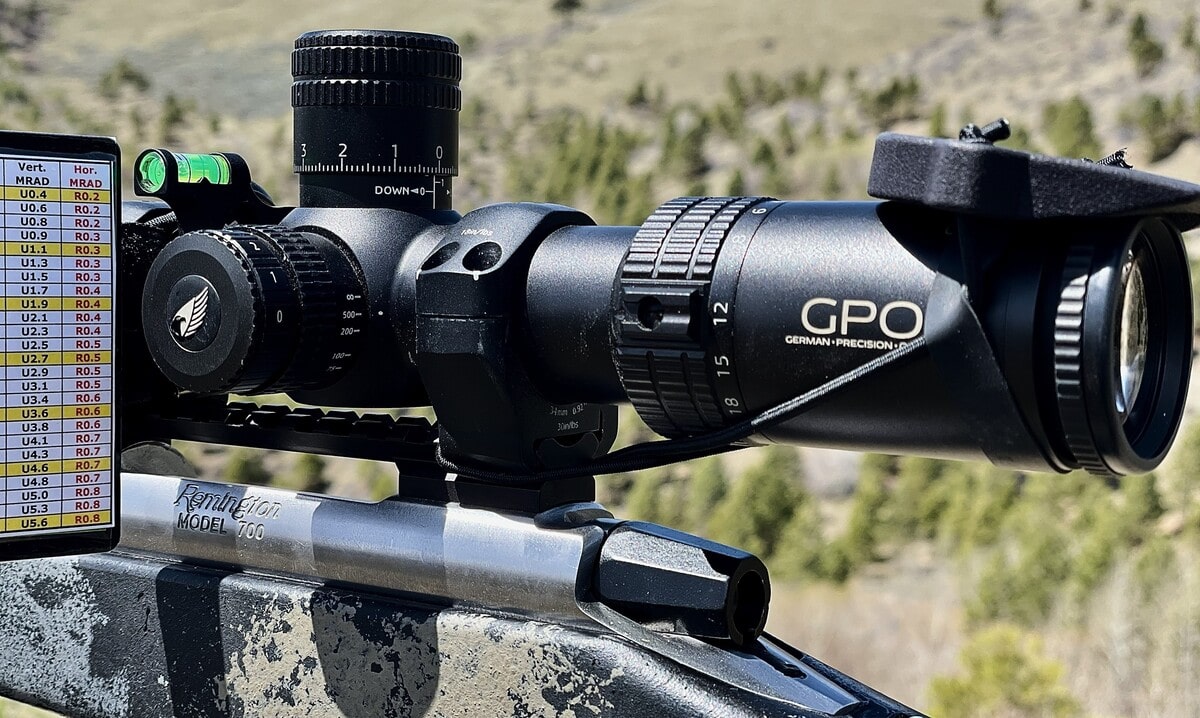
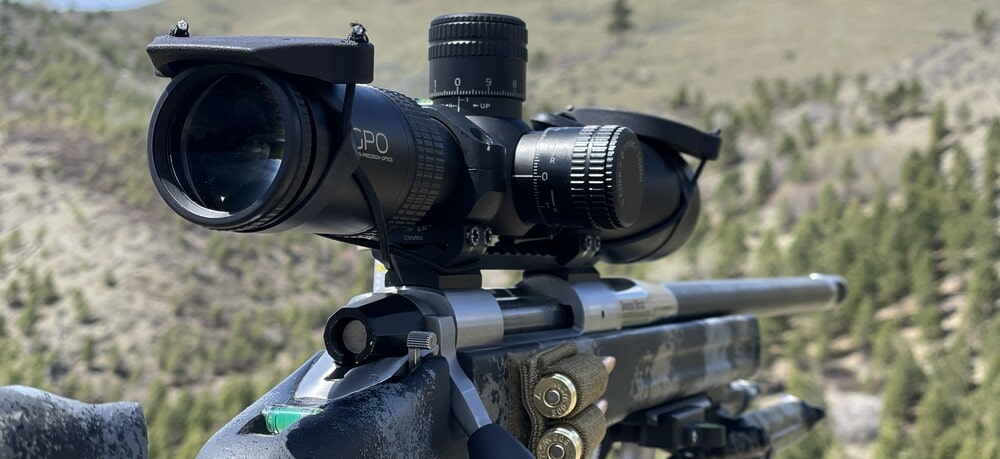
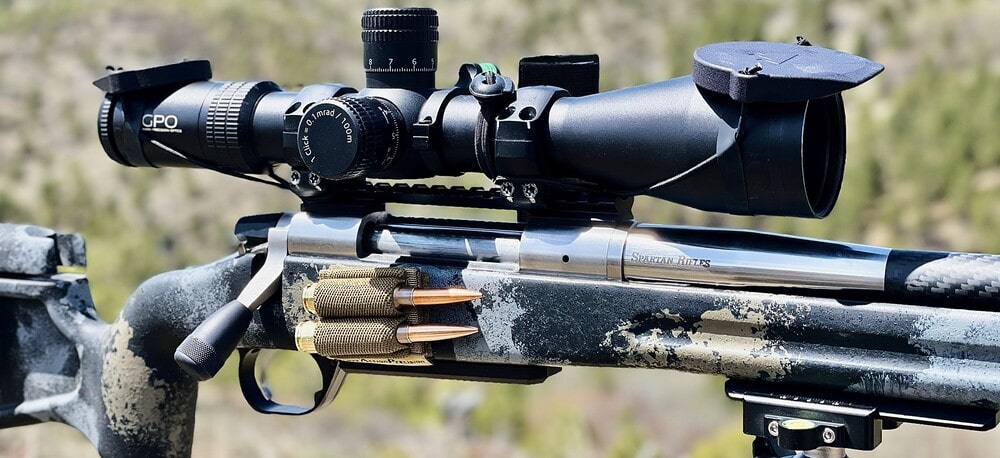
What prompted me to do this GPO rifle scope review? I liked the looks of the GPOTAC 4.5-27×50, I and wanted to test it. Well, my first adventure into GPO USA Optics came through their Rangeguide 2800 10×50 rangefinding binoculars. I was impressed with the ranging capabilities and the glass, so when I had the opportunity to use GPOTAC 4-27×50 rifle scope, I jumped on it. For this review I ended up testing two models from the GPOTAC rifle scope line. The GPOTAC line is the MIL-based line of the Sprectra 6x power scope line.
GPO USA is the U.S.-based division of German Precision Optics, which is based in Germany. GPO USA operates out of the state of Virginia and works in tandem with German Precision Optics to develop and produce optical products that meet the highest specifications.
Deciding On A Rifle Scope – GPOTAC 4.5-27x50i Rifle Scope Review
Before deciding on which scope you want to purchase. There are a number of things to consider.
- Intended use for the scope
- Magnification range
- Objective size
- Weight
- Reticle design, units, and illumination
- Focal plane (first or second)
- Turret style (capped or exposed)
- Tube diameter
- Price range
There are many different preferences and desired features depending on your use case, experience level, and personal preference. I decided on the GPOTAC 6X 4.5-27x50i scope because of a few factors.
First, I wanted a scope that was first focal plane, as I planned on this scope primarily being on a competition rifle when I first got it. Second, I needed exposed turrets because of the competition-oriented rifle use. Third, I wanted a higher magnification range. Weight did not matter to me for a competition rifle, but it did matter when I put the scope on a hunting rifle. The journey with the GPOTAC 4.5-27x50i scope was not without some bumps in the road. We’ll get more into that later, though.
GPOTAC 4.5-27x50i Specs and Features
As noted above, one of the big factors in selecting a scope that will meet your needs is its specs. Here is a rundown of the GPOTAC 4.5-27x50i rifle scope specifications:
| GPOTAC 4-27x50i Specs | |
|---|---|
| Weight | 31.8 oz |
| Length | 14.1 in |
| Objective | 50 mm |
| Zoom | 4.5x -27x |
| Eye Relief | @5x: 3.82 in @25x: 3.58 in |
| FOV @ 100yds | @4x: 23 ft @27x: 4 ft |
| Parallax Adjustment | 10 yds to Infinity |
| Tube Diameter | 34mm |
| Focal Plane | First |
| Elevation Turret | Exposed, Locking |
| Windage Turret | Exposed, Locking |
| Elevation Adjustment | 115in / 32 MIL |
| Windage Adjustment | 115in / 32 MIL |
| Illuminated Reticle | Yes |
| Waterproof/Fogproof | Yes |
| Zero Stop | Yes |
| Warranty | GPO Spectacular Lifetime Warranty |
GPOTAC 4.5-27x50i FEATURES
- Magnifying first focal plane reticle
- 34mm main tube
- Large mil-rad zero-stop, locking target turrets
- iControl illumination system
- Custom mil-spec LRi-Pro or PLRi reticle
- 6x zoom technology
- Removable magnification throw lever
- GPObright™ lens coating technology
- Double HD objective lenses
- See-through bikini ocular and objective covers
Reticle Choices: GPO Rifle Scope Review
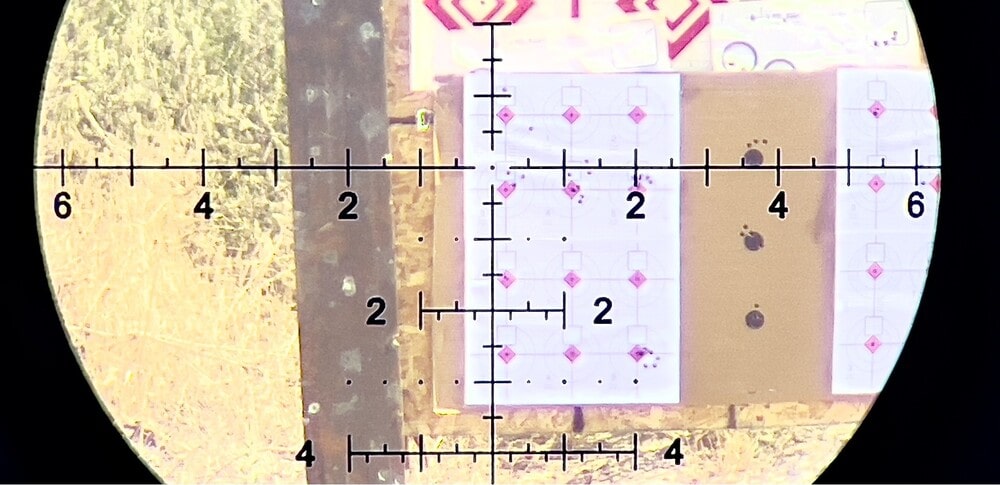
The GPOTAC 4.5-27x50i scope scope has three reticle choices. I evaluated the two MIL-based options. The first scope had the LRi-Pro reticle. This reticle was usable but not my favorite. The LRi-Pro reticle is a cleaner design that has a 0.5 MIL cross in the center of the reticle. There is a 0.5 MIL empty space all the way around that central cross. The reticle resumes in all directions at the 1 MIL marks. The reticle subtensions are 0.5 MIL apart in all directions. This can allow for quick references with minimal clutter, but it leaves a lot on the table for precise wind holds.

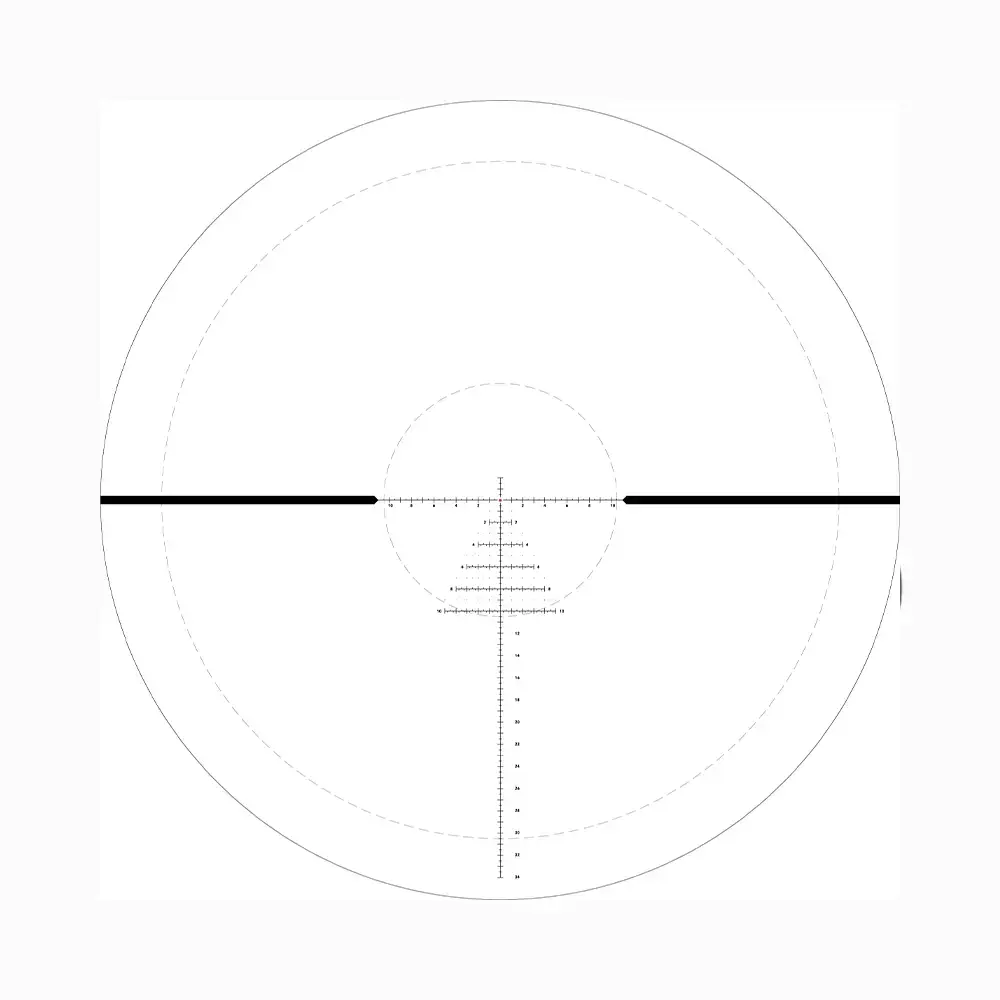
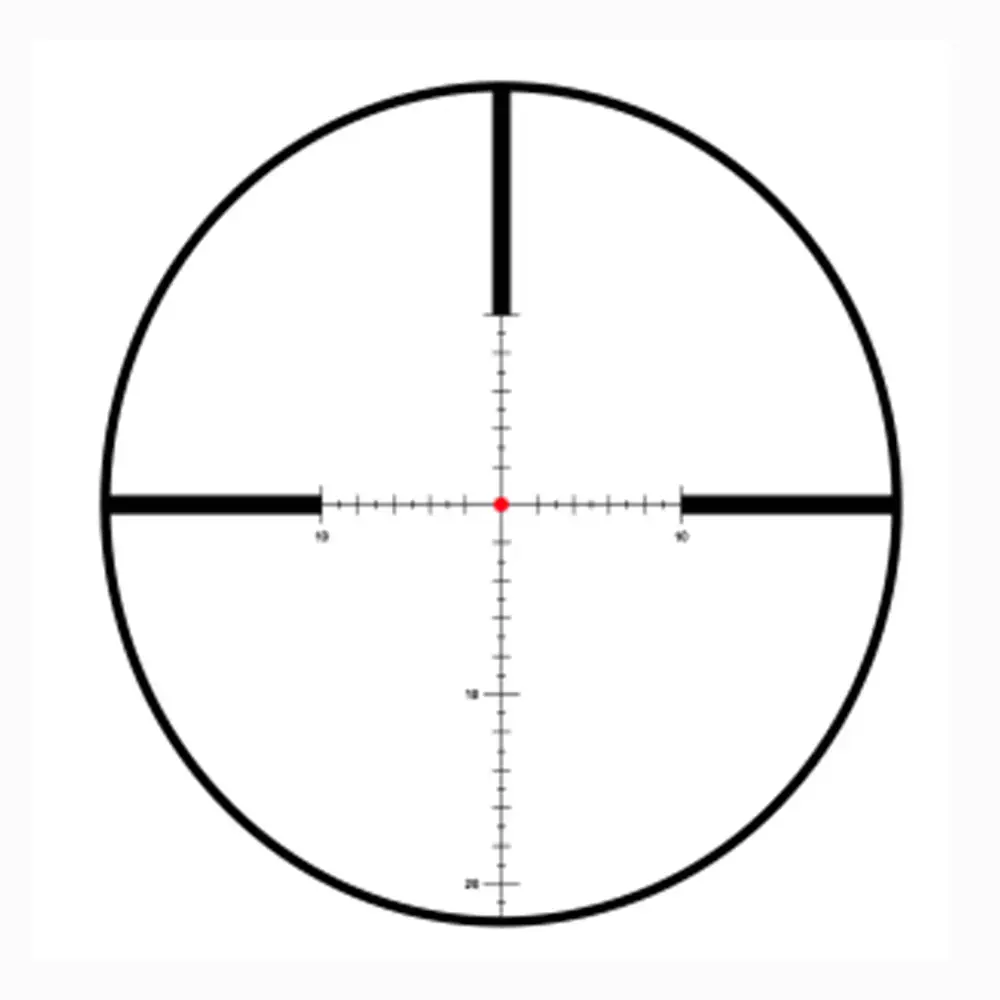
The second scope I evaluated during this GPO rifle scope review was the PLRi reticle. This reticle was more to my liking. It features a 0.075 MIL center dot for precise aiming. In each direction, there is an empty zone until you reach the 0.25 MIL mark away from center. The subtensions from there are 0.5 MIL. The bottom of the reticle is a Christmas tree–style reticle. On the horizontal stadia of the Christmas tree reticle, there are 0.25 MIL hash marks. I personally wish the main reticle subtensions were 0.25 MIL instead of 0.5 MIL.
Both of these reticles are first focal plane (FFP), which allows the reticle subtensions to maintain a consistent value no matter what magnification setting is used. I prefer FFP reticles for everything from plinking and competition shooting to hunting. It takes all the guesswork out of figuring out what value your subtensions are before calculating a wind hold. Unless I am zeroing the scope at 100 yards, I am almost never on max power when shooting in the field. I value field of view over magnification when it comes to field shooting.

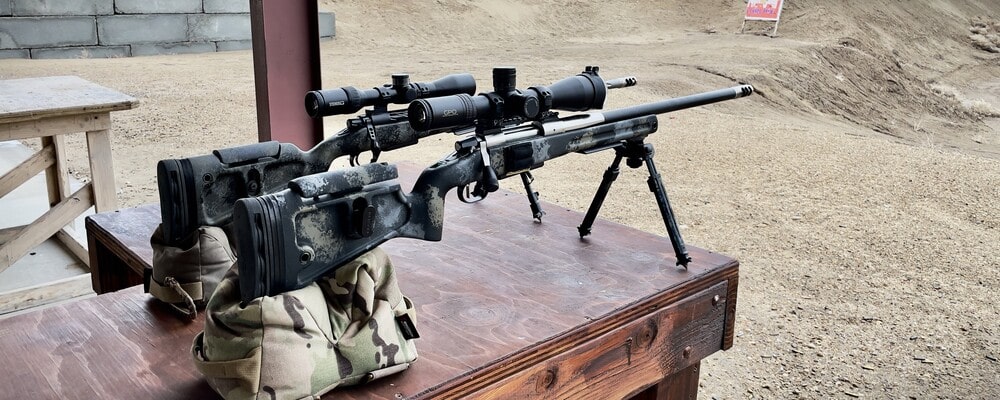
When hunting or target shooting, I take most of my shots under 800 yards on 8 power. From 800 to 1,000 yards, I will be at 10 power, and beyond 1,000 yards, I’ll be up around 12 power. This allows me enough precision to aim on the animal or target, while also allowing me to see the impact through the scope for faster follow-up shot corrections.
As much as I would like the reticle to have finer subtensions, it is usable across the entire magnification range.
Glass and Image Quality: GPO Rifle Scope Review
After testing both models for this GPO rifle scope review, the glass quality on the GPOTAC 4.5-27x50i rifle scope was excellent, as expected after looking through other lines of GPO Optics. Their glass quality is exceptional, thanks to GPObright™ lens coating technology and Double HD objective lenses. This results in excellent light transmission, contrast, and clarity.
I had this scope while I was evaluating several other high-end scopes, like the Nightforce NX8, the Leupold Mark 4HD, and Athlon ETR scope. While it’s not exactly an apples-to-apples comparison, I preferred the GPOTAC 4.5-27x50i glass over the Nightforce and Athlon glass. The glass on the Leupold is really close to the GPO.
I mainly used this scope for competition, but I mounted the first scope I evaluated on my long-action .300 WSM hunting rifle and took it into the field. For competition, I was able to easily pick out gray steel targets on the sagebrush hillside thanks to the excellent resolution and contrast this scope provides. I have had issues with lesser scopes in the past. While hunting, the large 50mm objective lens let in plenty of light during the dawn and dusk hours of the day.
Controls: GPO Rifle Scope Review
TURRETS – GPO RIFLE SCOPE REVIEW
Right away, when you handle this scope, you notice the large size of the turrets. The windage and elevation knobs protrude significantly from the scope body. This allows for easy access when you need to make an adjustment, but it also makes them more prone to getting snagged on things, as I noticed when I hunted with this scope. The click detents are very crisp, audible, and tactile. That is one thing I’ve enjoyed most about this scope.
The first scope I evaluated had a cleaner elevation turret. There were markings on the turret in 0.1 MIL increments for the full 10 MILs of travel per revolution. For each full MIL above zero, there was a number indicating how many MILs you had traveled from zero. On the fixed turret housing (not the turret cap that turns), there are revolution indicators you can reference to see how many revolutions you have gone up.
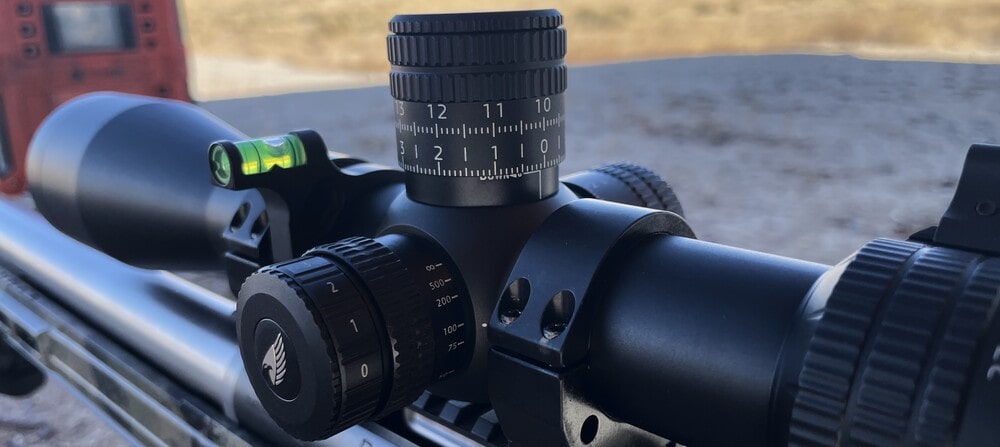
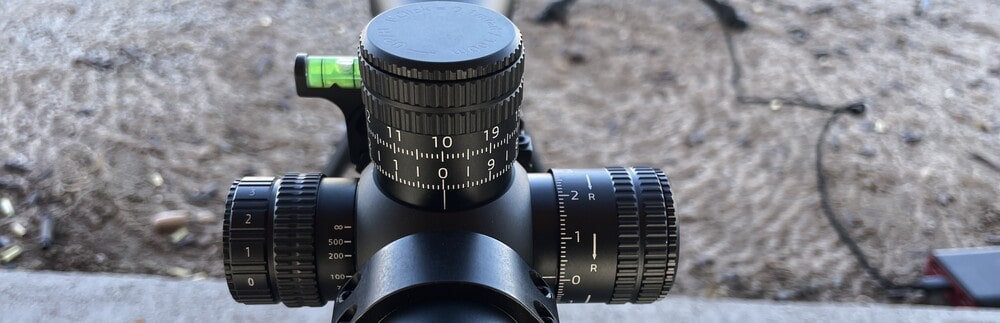
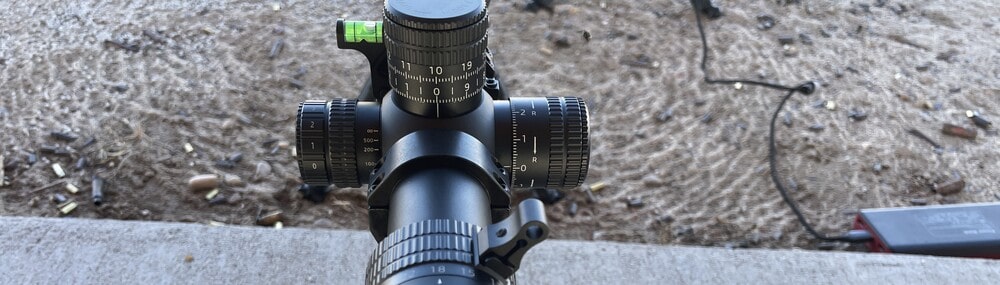
The second scope I evaluated shares the same turret graduations and revolution counter, but the main turret body has additional markings. These markings are for the second revolution above zero. Above the 0–9 MIL markings on the turret, there are 10–19 MIL markings. For most people, you will rarely go above 10 MILs of travel. To put that in perspective, that’s about 1,100 yards with my competition 6.5 Creedmoor and over 1,300 yards with my 6.5 PRC / 7 PRC hunting rifle.
The windage turret is marked from 1–5 MILs in both directions with 0.1 MIL graduations. There is an arrow with an “R”, indicating which direction to turn the turret to move your impact to the right. Both the windage and elevation turrets are locking. Simply pull up on the turret until it clicks to unlock it. Pushing the turret down until it clicks locks the turret from rotation.
Both the windage and elevation turrets on the GPOTAC 4.5–27x50i are easy to reset. The top of both turrets has a threaded cap that, when loosened by hand (without tools), allows you to remove the turret to access the zero stop or reset the turret back to the zero mark.
The ease of resetting the turret back to zero became very useful during a match where I used this scope. While on the clock, I had to reset my elevation turret to match my data for a target. This allowed me to continue using the data I had rather than doing math on the clock to adjust for my point-of-impact shift.
ZERO STOP – GPO RIFLE SCOPE REVIEW
The zero stop was not my favorite feature. The zero stop on the GPOTAC 4.5–27x50i was very similar to the Athlon ETR scope I previously evaluated. The zero stop is made of brass and has three small set screws evenly spaced around the brass zero-stop ring. There is a separate brass nub on the ring that contacts a nub on the turret body.
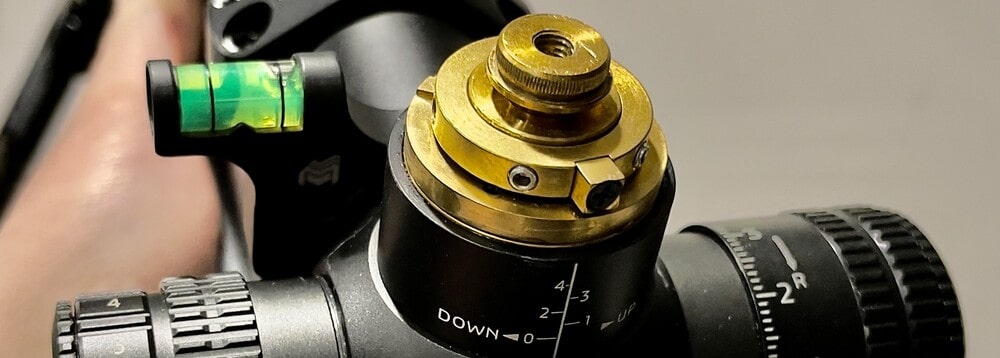
The zero stop can be adjusted to allow you to go below zero to whatever point you want. The biggest problem I have with this type of zero stop is the amount of time it takes to get it set where you want it. Once you set your zero stop, you can generally forget about it, unless you swap the scope between rifles a lot, like I did. This means you have to reset the zero stop frequently, and you will quickly notice how time-consuming it is to set compared to some other scopes.
PARALLAX / ILLUMINATION – GPO RIFLE SCOPE REVIEW
The parallax knob on the GPOTAC 4.5-27x50i scope scope is large, allowing for easy access with either hand while you are behind the rifle. The parallax knob is very smooth to operate and is marked in meters at 25, 50, 75, 100, 200, 500, and infinity. Keep in mind that these are reference points, and depending on your magnification and diopter settings, those marks may not line up exactly with the corresponding yardage.
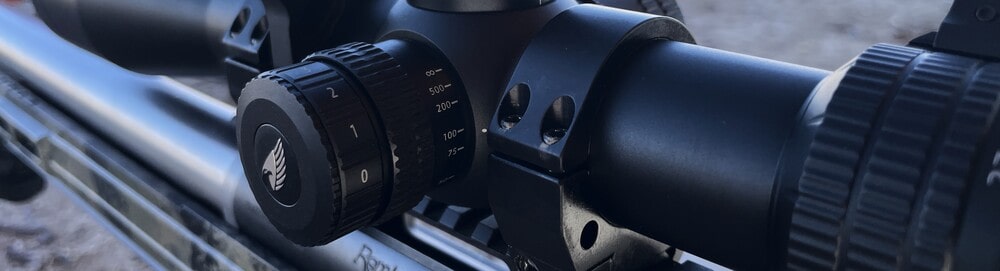
The illumination is set on the outer ring of the parallax knob. The illumination adjustment is stepless, meaning there are no fixed levels. There are markings on the dial numbered 1–8, but there are no detents at each setting. Instead, it is a smooth, fluid adjustment, allowing you to dial in the exact level of illumination you want—not too bright, not too dim, but an almost infinite adjustment to get it just right.
DIOPTER / MAGNIFICATION – GPO RIFLE SCOPE REVIEW
The diopter adjustment is marked for reference with hash marks along about an inch of the internal diopter tube. The tension is substantial, but the adjustment is smooth. I never worried about my diopter setting getting bumped or changing with this scope.

The magnification ring comes with a removable throw lever that is fixed at the 12-power position. I had a major issue with the location of this throw lever. The fact that it was not movable caused me problems. With the magnification throw lever installed, when the magnification was set between 22 and 27 power, it would be in the way of my rifle’s bolt throw. My knuckles would hit the throw lever, and I ended up skinning my knuckles because of it.
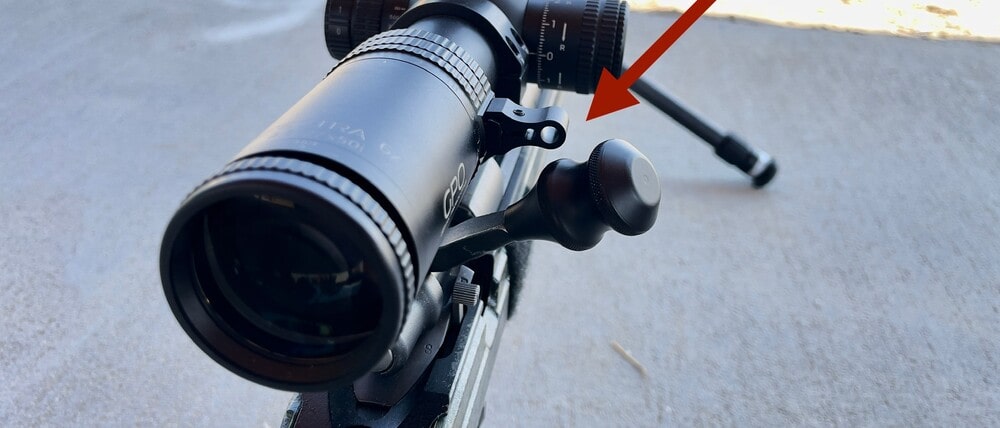
I only ran into this issue when zeroing the rifle. During competitions, I never run the scope at that high of magnification, so it wasn’t an issue, but it was always in the back of my mind. I ended up removing the throw lever, as the magnification ring was smooth enough that I did not need it. I feel like this was a significant oversight in the design, though.
Testing Result/Issues – GPO Rifle Scopes Review
For the most part, the GPOTAC 4.5-27x50i scope was a smooth operator during this GPO rifle scope review. After using the first scope on a .300 WSM hunting rifle, I put the scope on my 6.5 Creedmoor competition rifle. Between all the rifles I mounted the scope on, I had around 2,000 rounds fired without issues with zero retention or tracking. I travel roughly 10 miles to the range each time, but about 90% of that is on a rough washboard dirt road. I have had other scopes I’ve evaluated develop issues holding zero because of the washboard road. The first GPOTAC scope also experienced issues.
The issues with zero retention and tracking started a couple of weeks before a match. I drove out to the range to confirm zero after shooting the same setup five days prior. The only difference was that the setup had made two trips (home and back to the range) on that washboard road. When I checked zero, I was 1.5 inches high and to the right of my point of aim. That was significant, because that rifle and load would consistently shoot 0.5–0.7-inch ten-shot groups on demand.
To try and flush out the issue before the match, I put the scope on my other competition 6 GT rifle. This rifle is a true sub-MOA rifle, and I’ve even shot a 0.8-inch fifty-shot group with it. That rifle would routinely shoot sub-0.5-inch 10–12 shot groups. After zeroing the rifle, traveling home, and then less than a week later going back to the range to confirm zero the day before a match, I saw the same problem. The scope again lost zero in a significant way, far outside the cone of fire for that 6 GT–chambered rifle. It was too late to swap scopes before the match.
At the match, we had a cold-bore challenge where we had to see who could get closest to the center of a playing card at 100 yards. As I expected, my shot was almost 2 inches high of my point of aim. As I mentioned above, once on the clock, I was able to take one shot at 415 yards, measure the impact location in my reticle, make a turret adjustment, and get an impact on the second shot.
Throughout this GPO rifle scope review, I found the turrets to be so easy to adjust and reset that I was able to slip the turret to the data I had for the conditions. I went on to finish the match, and aside from that first dropped shot due to the loss of zero, I did not drop another shot because of the scope. After the match, I contacted GPO USA and advised them of the issues I experienced with the scope.
Without question and without hassle, just as the GPO Spectacular Warranty indicates, they took back the scope I was having an issue with and sent me a new one—the updated model with the PLRi reticle, which wasn’t available when I received the first one.
Make sure to check out our other gear reviews and the Backwoods Pursuit YouTube Channel to help you decide what gear will help you stay out in the field longer!
This was a very comforting feeling because, no matter what scope you have, it’s a mechanical piece of equipment that can have issues. Having a company stand behind their warranty is huge. I have had issues with other companies in the past giving me grief over warranty claims.
Since receiving the replacement scope, I’ve gone on to shoot another 2,000 rounds across multiple rifles with zero issues. The scope has traveled back and forth on that washboard road at least 40 times along with those rounds, and it has retained zero and tracked beautifully.
What I Liked: GPO Rifle Scope Review
I liked a lot of things about the GPOTAC 4.5-27x50i rifle scope. Here were my favorite features:
- Exceptional glass clarity
- Locking turrets
- Crip turrets
- Stepless illumination
- Easily resettable turrets
- Large magnification range
- Large amount of vertical turret travel
- Usable reticle size throughout the magnification settings
What I Disiked: GPO Rifle Scope Review
This GPO rifle scope review left me with a few things that I didn’t love about the GPO 4.5-27×50 scope.
- Throw lever location on higher magnification
- Zero-stop style
- Larger reticle subtensions
- Weight (31.8 oz bare scope)
Conclusion: GPO Rifle Scope Review
The GPOTAC 4.5–27x50i is a powerhouse scope, full of features with exceptional glass. Between the two scopes, I did experience issues, but the final scope has performed well and continues to do so. For a competition scope, the GPOTAC 4.5–27x50i is a no-brainer. The large, locking turrets are a joy to use. I hope that down the road, they will change the reticle to 0.25 MIL subtensions instead of 0.5 MIL. I would also like them to update the throw lever location.
If you are looking for a hunting scope, this scope might be a bit overkill. While the magnification range would work fine, the scope comes with a weight penalty. On my scale, with rings and a bubble level (without the included scope lens covers), it weighed 36 oz (2 lb 4 oz). That’s a lot of scope for someone trying to build a lighter rifle. I truly enjoyed dealing with GPO as a company, and their glass and build quality were exceptional.
Subscribe to Backwoods Pursuit to get Your FREE Backcountry Gear Worksheet!!!
Dial in your gear list, calculate your pack weight, and lighten up your pack with this handy tool!