
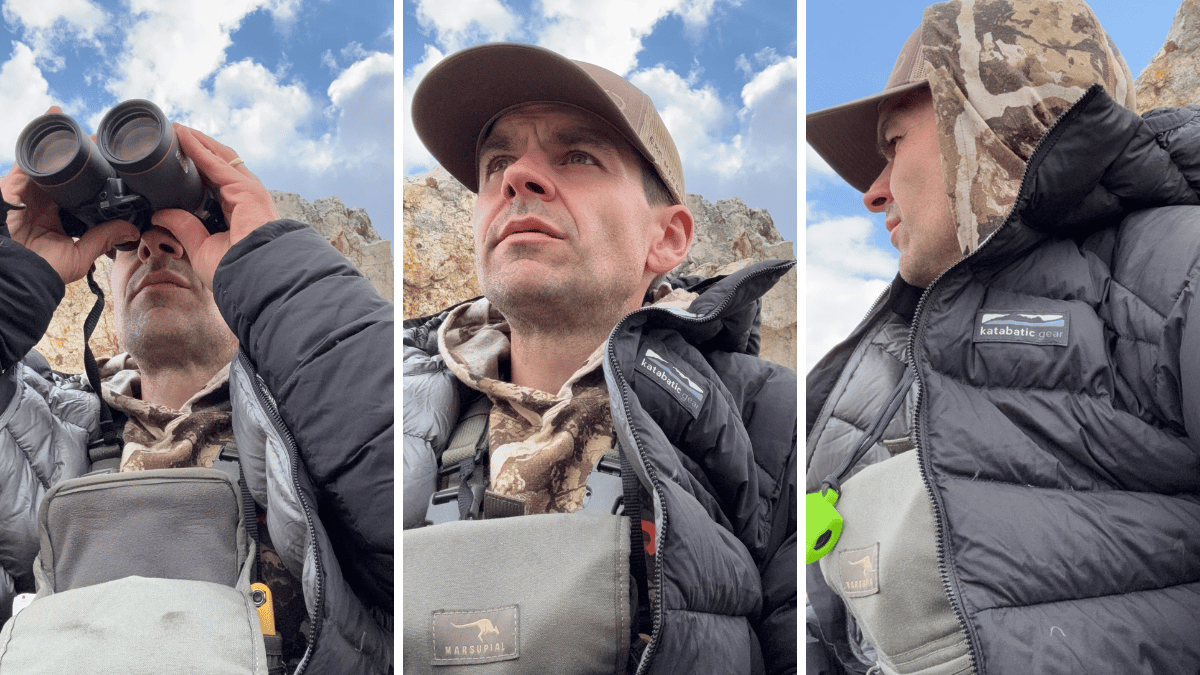
It was early August of 2024, and I was gearing up for an upcoming sheep hunt when I first expressed interest in this Katabatic jacket. Unfortunately, we didn’t get it until later that year, after most of the hunting season was already over. That timing wasn’t ideal, but it did give me an opportunity to test the jacket through the later stages of the 2024/25 winter, and then again throughout the 2025 hunting season in a wide variety of mountain temperatures and conditions.
And after putting real time in with the Katabatic Tincup jacket, I can say this confidently: it isn’t just a “nice lightweight puffy.” It’s a legitimately high-performing warmth piece that hits a very specific sweet spot—serious warmth, low weight, and true backcountry practicality.
A lot of insulating jackets market themselves as “ultralight” or “warm for their weight,” but the Tin Cup was one of those rare pieces of gear where you put it on and immediately think, okay…this is different. It has the kind of warmth you normally associate with heavier, bulkier down jackets, but without the penalty of hauling something oversized and annoying in your pack.
This review breaks down how the Katabatic Tincup performed across warmth, fit, durability, features, and what I think could still be improved.
How It Was Tested – Katabatic Jacket Review
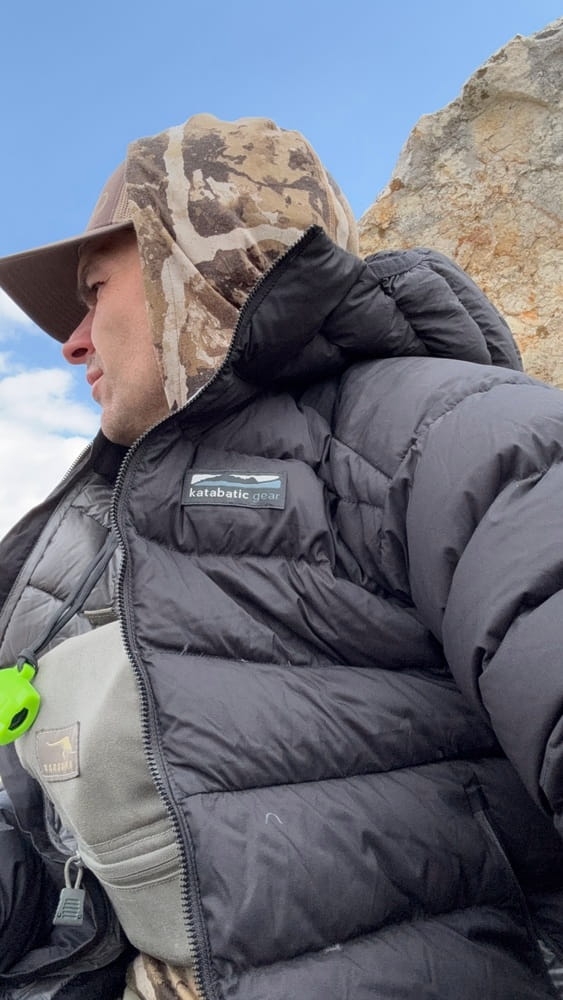
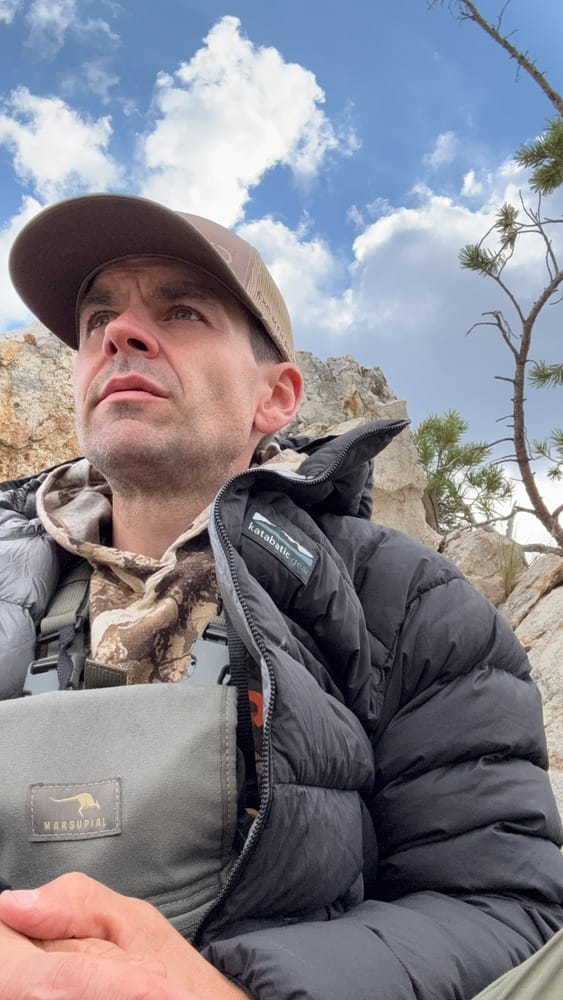
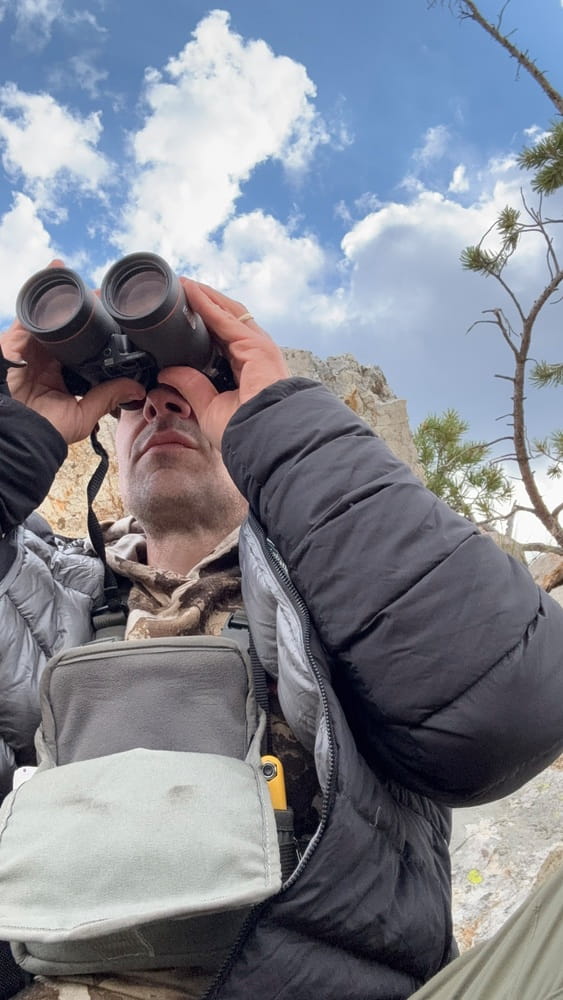
This Katabatic jacket wasn’t tested in controlled conditions or quick backyard use—it was worn through various seasons where the weather shifts constantly and you’re often asking your insulation to do a lot.
Because we received it late in 2024, the earliest meaningful testing came in the back half of that winter. From there, it was used through the 2025 hunting season in real mountain conditions, including glassing sessions, cold mornings, windy ridges, and evenings in camp when your activity level drops and the temperature starts clawing its way down.
This Katabatic jacket wasn’t babied, either. It got stuffed into packs, pulled out repeatedly, worn over base layers, worn over midlayers, and used in the exact scenarios where you’re most likely to rely on it: those times when being cold isn’t just uncomfortable—it becomes distracting and starts draining energy.
Warmth vs. Weight (The Big Story Here)
The standout trait of the Katabatic Tincup jacket is its exceptional warmth-to-weight ratio.
This thing was genuinely impressive, delivering warmth that normally comes from jackets significantly heavier than this. Some lightweight down pieces feel like they’re only meant for mild cold or short stops. The Tin Cup doesn’t. It feels like a jacket that was built for people who spend long days outside and want an insulation layer that actually holds the line when conditions drop into “real cold.”
What makes it even more impressive is the efficiency of the build. With just shy of 50% of its total weight devoted to 850+ down (44.1% to be exact), it reliably holds warmth in conditions where many other similarly classed jackets struggle. That’s not just a nice spec on paper—that’s something you feel when you’re sitting still behind glass and the temperature is hovering in the 20s.

Make sure to check out our other gear reviews and the Backwoods Pursuit YouTube Channel to help you decide what gear will help you stay out in the field longer!
In camp, or when your activity level drops, the jacket’s loft and thoughtful baffling—especially around the hood and shoulders—trap heat efficiently. In practical terms, it kept me warm often into the low 20s without needing to do much more than throw it on and zip it up.
This is the kind of jacket you reach for when you want to:
- stay warm while glassing without constantly shifting around to “stay moving”
- stop for a snack without instantly cooling off
- handle cold mornings when you’re waiting for the day to warm up
- keep warmth in camp without needing to layer up like a marshmallow
If you’ve ever owned a puffy that technically works but doesn’t really feel like it’s doing much unless you stack three other layers under it, the Katabatic Tincup jacket feels like the opposite of that.
Loft & Heat Retention (Especially in the Hood/Shoulders)
One of the underrated elements of this jacket is how well it holds warmth in the areas of your body that matters most—your upper torso, shoulders, and head/neck area.
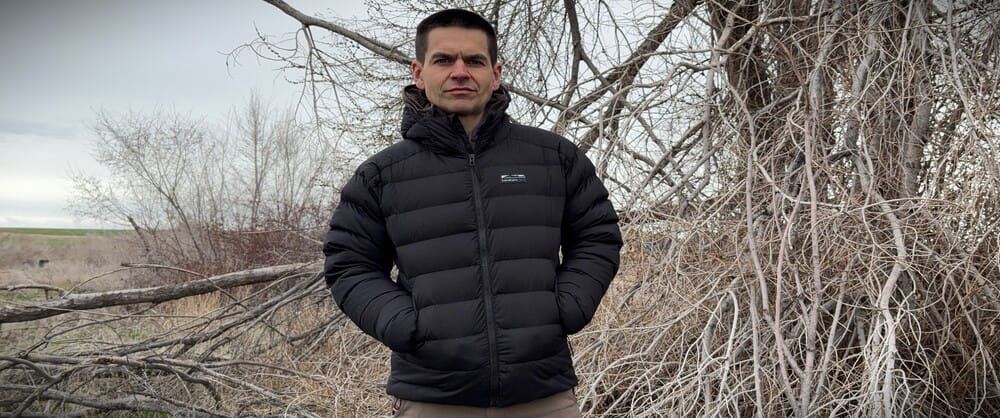
That might seem like a small detail until you’ve spent enough time in mountain wind where cold seems to seep in from the top down. A jacket can have great down fill, but if the design doesn’t keep heat locked in around the neck and shoulders, the warmth leaks out fast.
The Katabatic Tincup’s loft and baffling do a really good job here. It doesn’t feel like a flimsy “windshirt with fluff inside.” It feels like a true insulation piece that was built with cold use in mind.
Comfort & Fit – Katabatic Jacket Review
The interior of this Katabatic jacket features Pertex Quantum Taffeta lining is noticeably soft and non-sticky compared to some lightweight jackets, and that makes it a joy to wear next to just a base layer.
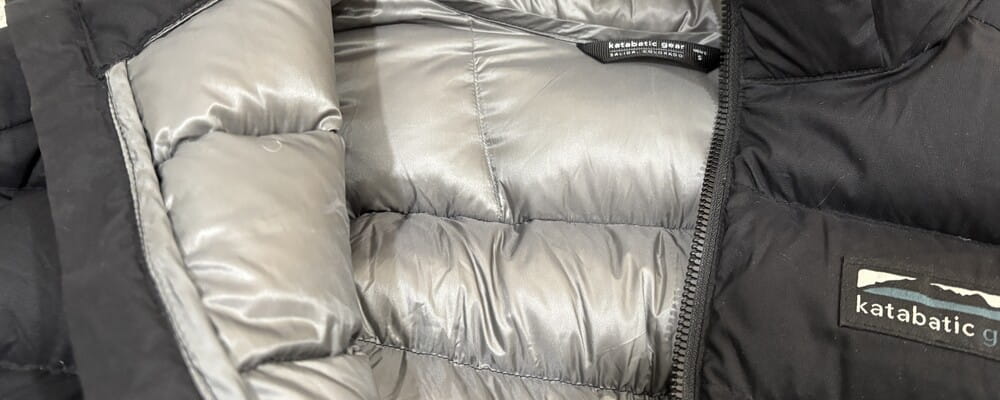
In fact, this jacket has the most comfortable interior lining on any jacket I’ve ever worn…and you can feel it. That’s saying a lot considering the literal heap of jackets I have owned and tested.
That might sound dramatic, but I mean it. A lot of lightweight puffy jackets get clammy, or they feel like plastic against your skin, or they stick to your base layer in a way that just feels annoying. The Katabaitc Tincup jacket doesn’t have that problem.

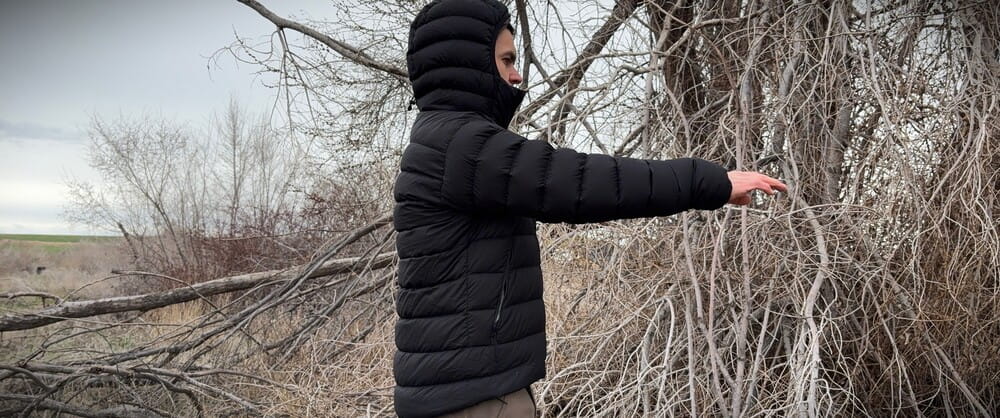
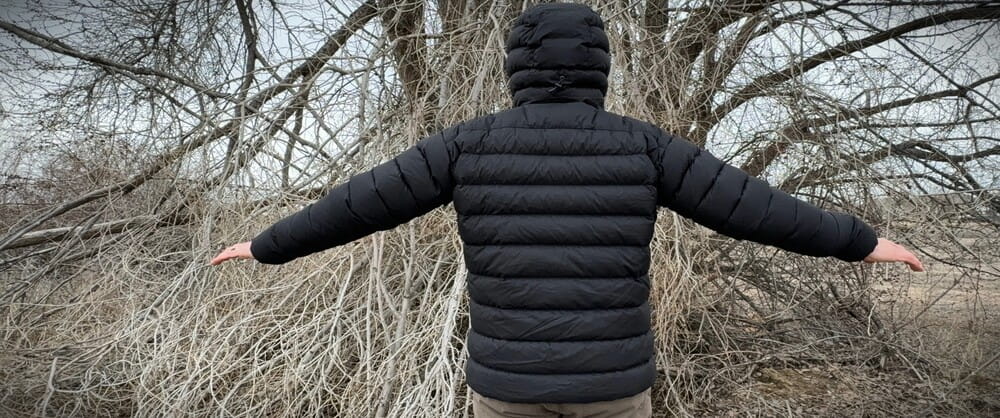
It’s one of those jackets where you put it on and it immediately feels “finished”—not like a fragile technical garment you have to treat carefully.
Sizing (Accurate, Generous, and Improved)
I found sizing to be accurate and generous. I could fit a base and mid-layer under my standard size (small), which is exactly what I want from a cold-weather insulation layer. If I’m buying a jacket designed to keep me warm in low temps, I don’t want a tight athletic cut that forces me to size up just to layer properly.
This was something Katabatic Gear enhanced on this version of the jacket compared to the first, and it shows. It feels like they listened to real user feedback and adjusted accordingly.
That said, it still doesn’t feel baggy. It just feels like it was built by people who understand how hunters and backcountry users actually wear insulation layers.
Durability – More Confidence Than Most Ultralight Puffy Jackets
Durability is where the Katabatic Tincup jacket separates itself from a lot of the “in-class” competition. You can feel a huge difference between the 20D face fabric and some lighter options that use 10D to save weight.
Don’t get me wrong—10D stuff has its place. But there’s always a tradeoff. The lighter the fabric, the more careful you have to be. Some ultralight puffy jackets honestly feel like they could rip if you look at them wrong.
The Tin Cup doesn’t feel that way.
While I wouldn’t go blowing through a thicket of willows with this on, I also don’t feel like I’m going to tear it when I sneeze. And that matters. When you’re hunting, glassing, or hiking through terrain where you’re brushing rocks or kneeling down in uneven places, you want insulation that can handle a little real-world contact.
In fact, I brushed up against some rough rock while glassing in October and didn’t have any punctures or snags. That was a major confidence boost, because a lot of jackets in this weight range would have come away with at least some abrasion marks or small damage.
Down Loss at Seams – A Note Worth Mentioning
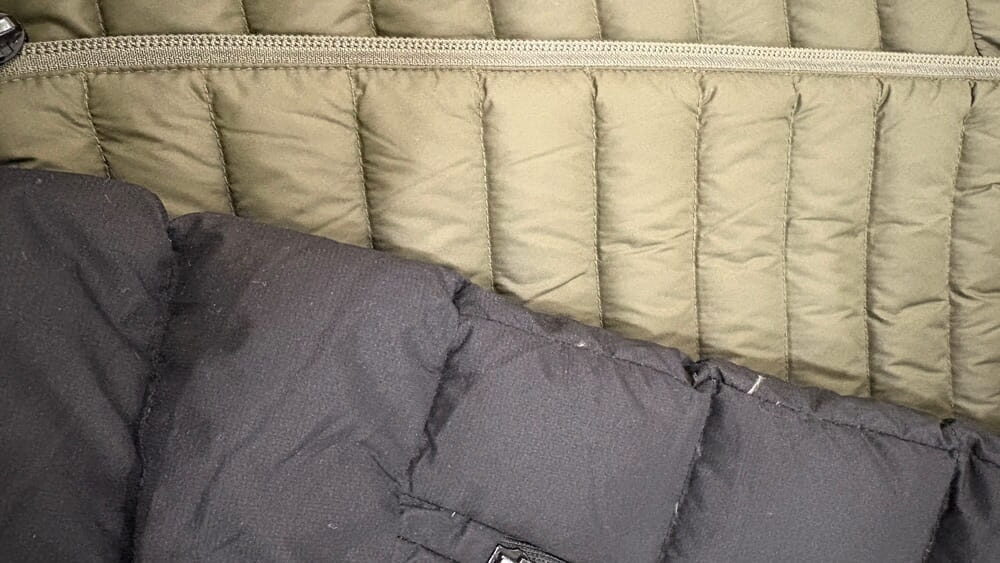
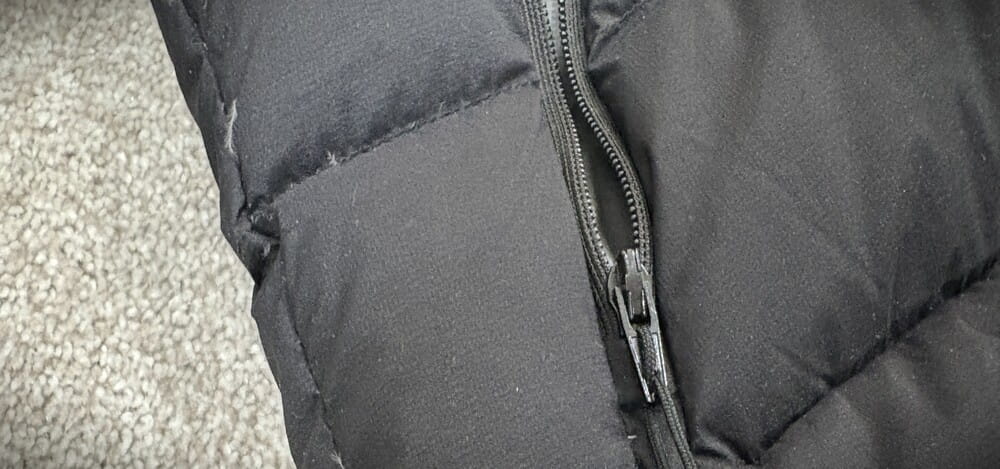
I will say that I noticed a fairly significant amount of down loss at the stitching/seams when I first received the jacket. That’s not something you want to see on a premium down jacket—especially not one that is clearly engineered for serious use. We reached out to Katabatic about this, and they assured me they have not had problems like that with production models (the one I received for testing was a pre-production model).
I did not receive a replacement to verify if this is still an ongoing issue or not, so, I’m not going to overreact to it, but I also won’t ignore it. My hope is that it was an early or isolated issue, because the rest of the jacket feels extremely refined. If someone asked me what I’d want to watch for out of the box, it would be seam integrity and early down leakage.
That said, once the jacket was in use, it didn’t change how warm it was, and it didn’t suddenly stop performing. It’s just one of those things that stood out enough to mention.
Color Options – Good Options, Just Not Ideal For Hunters
While the Katabatic Tincup jacket does come in a number of color options, but none are ideal for staying concealed on the mountain, which is a preference for us hunters. I also understand that hunters aren’t the primary target audience for the jacket, but it would be nice to see some more earth tones offered for those of us hunters that find this hidden gem of a jacket and want to use it for hunting.
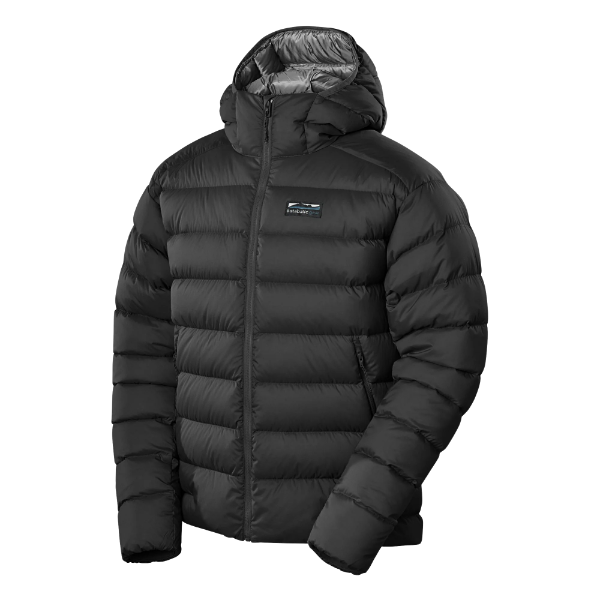
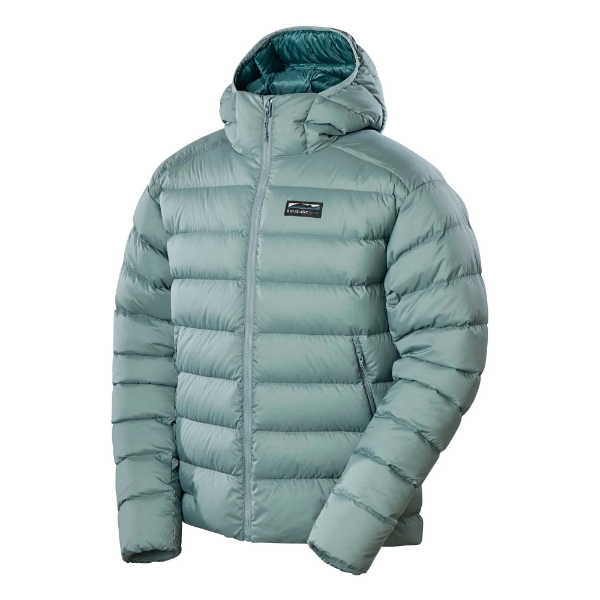
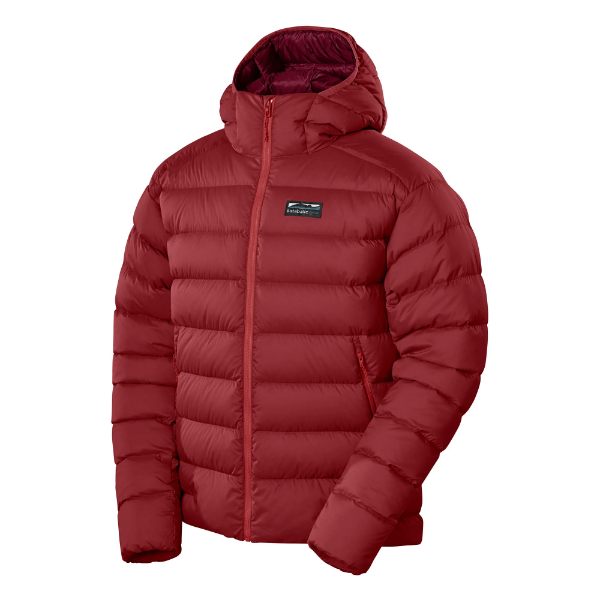
I’ve seen the “Glacier” color in person and I own black. Glacier trends more towards blue than gray, and black is, well…black. A green, brown, or other more subtle color would make this the ideal jacket in my mind, at least for my purposes.
Color certainly isn’t a deal breaker for everyone, especially if you’re using the Tincup more for backpacking, general outdoor use, or even as a dedicated insulation layer that goes on mostly when you’re stationary. But from a hunting standpoint, I’d love to see Katabatic Gear release something more naturally “mountain neutral.”
The jacket performs so well that it’s almost frustrating that the color options don’t perfectly match the activity I’d like to use it for.
Where the Tin Cup Fits Best & Who It’s For
The Katabatic Tincup jacket is built for people who actually get cold—and don’t want to carry extra weight to solve the problem. If you’re the type that runs hot nonstop, hikes hard, and almost never stops moving long enough to need a serious insulation piece, you might not need something like this, but if you hunt, backpack, or spend long stretches glassing and waiting in the mountains, this jacket makes a lot of sense.
It’s especially strong for:
- sheep hunting
- late-season deer/elk hunts
- high-elevation glassing setups
- cold mornings and long evenings in camp
- anyone trying to reduce pack weight without losing warmth
It’s also a good option for someone who wants one jacket that works across a wide window of use without having to own multiple puffy jackets for different conditions.
What I Loved – Katabatic Tincup Jacket
Here’s what stood out the most to me after real use:
- Elite Warmth-to-Weight Performance – This is what makes the jacket special. It punches above its class.
- Comfortable Lining – The Pertex interior feels genuinely premium and stands out immediately.
- Thoughtful Heat Retention – Hood and shoulder design trap heat well, especially when stationary.
- Practical Sizing – Fits layers underneath without needing to size up.
- Stronger Face Fabric (20D) – More durability confidence than most ultralight insulation jackets.
What I Didn’t Like – Katabatic Tincup Jacket
No piece of gear is perfect, and the Tin Cup is no exception.
- More “Hunting-Friendly” Color Options – A more subdued earth-tone option would take it from great to ideal.
- Initial Seam/Down Loss Concern – Katabatic Gear says it isn’t common on production models, but it’s worth noting.
Final Thoughts – Katabatic Jacket Review
This Katabatic jacket is one of those jackets that immediately earns a spot in your kit because it solves a real problem: staying warm without hauling extra weight.
It excels when you’re not moving much—when you’re glassing, sitting, waiting out weather, or just trying to recover in camp. And it does it without feeling like a bulky expedition parka or a fragile ultralight piece that you have to protect like it’s made of tissue paper.
If warmth-to-weight is your priority, the Katabatic Tincup is hard to ignore. It’s the kind of insulation layer that makes you feel like you packed smarter, not heavier. For mountain hunters and backcountry users who spend serious time exposed to unpredictable temperatures, that’s exactly what you want.
Subscribe to Backwoods Pursuit to get Your FREE Backcountry Gear Worksheet!!!
Dial in your gear list, calculate your pack weight, and lighten up your pack with this handy tool!